Garage conversions offer homeowners a practical way to add living space without building an addition. Whether the goal is a home office, guest suite, or rental unit, converting a garage can increase property value and improve daily life. This guide covers the most popular conversion types, planning essentials, permit requirements, and realistic cost expectations. By the end, readers will have a clear roadmap for turning an underused garage into functional living space.
Table of Contents
ToggleKey Takeaways
- Garage conversions are a cost-effective way to add living space, with options ranging from home offices to full ADUs that generate rental income.
- Budget $10,000–$25,000 for basic garage conversions, $25,000–$50,000 with a bathroom, or $75,000–$150,000 for complete ADU builds in high-cost areas.
- Always obtain permits before starting—unpermitted work can lead to fines, forced removal, and complications when selling your home.
- Plan for HVAC upgrades, electrical panel capacity, and natural light requirements to meet building codes for habitable space.
- Garage conversions can return 50%–80% of project costs in added home value, with ADUs offering faster payback through rental income in housing-shortage markets.
- Check local zoning laws and HOA restrictions early, as some areas prohibit ADUs, require parking replacements, or mandate architectural review.
Popular Types of Garage Conversions
Garage conversions come in many forms, and the best choice depends on household needs and budget. Here are the most common types homeowners pursue:
Home Office or Studio
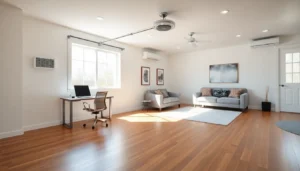
Remote work has made home offices one of the most requested garage conversions. A detached or attached garage provides separation from the main living area, which helps with focus and work-life balance. Many conversions include built-in desks, storage cabinets, and dedicated electrical circuits for equipment.
Accessory Dwelling Unit (ADU)
An ADU is a self-contained living space with its own entrance, kitchen, and bathroom. Garage conversions into ADUs have become popular in states like California, where housing shortages drive demand for rental units. Homeowners can generate rental income or house family members while maintaining privacy.
Guest Suite or In-Law Apartment
Similar to an ADU but often without a full kitchen, a guest suite works well for visiting family or aging parents. These garage conversions typically include a bedroom, bathroom, and small sitting area. Some homeowners add a kitchenette with a mini fridge and microwave.
Entertainment Room or Home Gym
For families who want more recreational space, garage conversions can become game rooms, home theaters, or fitness areas. These projects often require less plumbing work than living quarters, which reduces costs. Soundproofing and climate control become priorities for these uses.
Rental Unit
In high-demand rental markets, garage conversions can pay for themselves within a few years. Local regulations vary widely, so homeowners should check zoning laws before planning a rental conversion. Some areas require off-street parking replacements when garages are converted.
Key Planning Considerations Before You Start
Successful garage conversions require careful upfront planning. Rushing into construction without addressing these factors often leads to costly changes mid-project.
Structural Assessment
Most garages have concrete slab floors, which may sit lower than the main house. Raising the floor to match interior levels adds cost but improves accessibility and aesthetics. Walls may need insulation, and the ceiling height should meet local building codes for habitable space, typically at least 7 feet.
HVAC and Electrical Systems
Garages rarely have adequate heating, cooling, or electrical capacity for living space. Homeowners should assess whether the existing HVAC system can handle additional square footage or if a separate mini-split unit makes more sense. Electrical panels may need upgrades to support new circuits.
Natural Light and Ventilation
Garage conversions often lack windows, which creates challenges for both comfort and code compliance. Adding windows or a sliding glass door improves light and airflow. Egress requirements for bedrooms typically mandate at least one window large enough for emergency exit.
Parking Replacement
Converting a garage eliminates covered parking. Some municipalities require homeowners to provide alternative off-street parking before approving garage conversions. Even without legal requirements, losing garage space affects resale appeal for some buyers.
Plumbing Access
Adding a bathroom or kitchen to a garage conversion increases project scope significantly. Plumbing runs may need to connect to existing lines or require new sewer connections. The concrete slab often needs cutting to install drain lines.
Understanding Permits and Building Codes
Garage conversions almost always require permits. Skipping this step can result in fines, forced removal of work, and problems when selling the property.
Common Permit Requirements
Most jurisdictions require building permits for garage conversions that create habitable space. This includes electrical permits, plumbing permits (if applicable), and mechanical permits for HVAC work. The permitting process involves submitting plans, paying fees, and scheduling inspections at various stages.
Building Code Standards
Building codes govern minimum standards for safety and habitability. Garage conversions must meet requirements for:
- Ceiling height (usually 7 feet minimum)
- Egress windows in bedrooms
- Smoke and carbon monoxide detectors
- Electrical outlet spacing and capacity
- Insulation R-values for walls and ceilings
- Fire separation between garage and living space (if partial conversion)
Zoning Regulations
Zoning laws determine what types of garage conversions are allowed in specific areas. Some neighborhoods prohibit ADUs or rental units. Others have setback requirements that affect window placement or exterior changes. Homeowners should verify zoning compliance before investing in detailed plans.
HOA Restrictions
Homeowners associations may have rules that go beyond local codes. Some HOAs ban garage conversions entirely or require architectural review. Reviewing CC&Rs (Covenants, Conditions, and Restrictions) early prevents surprises later.
Costs and Return on Investment
Garage conversion costs vary widely based on project scope, location, and finish quality. Understanding typical ranges helps homeowners budget realistically.
Average Cost Breakdown
Basic garage conversions, adding insulation, drywall, flooring, and electrical upgrades, typically cost between $10,000 and $25,000. Mid-range projects with a bathroom addition run $25,000 to $50,000. Full ADU conversions with kitchens and separate utilities can exceed $75,000 to $150,000 in high-cost areas.
Major cost factors include:
- Foundation and floor leveling work
- HVAC installation or extension
- Plumbing for bathrooms or kitchens
- Window and door additions
- Permits and professional fees
- Finish materials and fixtures
Return on Investment
Garage conversions often deliver strong ROI compared to other home improvements. Converting a garage to living space can add 50% to 80% of project costs to home value, depending on the market. In areas with housing shortages, ADU conversions may recoup costs even faster through rental income.
But, ROI depends heavily on local buyer preferences. In neighborhoods where two-car garages are standard, eliminating garage space might hurt resale value. Homeowners should research comparable sales before committing to garage conversions.
DIY vs. Professional Work
Some garage conversion tasks suit DIY efforts, painting, basic flooring installation, and trim work. But, electrical, plumbing, and structural changes require licensed professionals in most areas. Cutting corners on permitted work creates liability and may void homeowner’s insurance coverage.