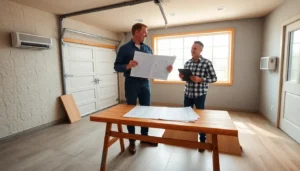
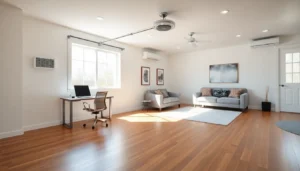
Garage conversions offer homeowners a practical way to add living space without building an extension. Whether the goal is a home office, guest suite, or rental unit, converting a garage can boost property value by 10-15% on average. This guide explains how to handle garage conversions from start to finish, covering permits, construction steps, costs, and timelines. Homeowners who follow these steps can transform an underused space into a functional room that meets building codes and personal needs.
Table of Contents
ToggleKey Takeaways
- Garage conversions can boost property value by 10-15% while adding functional living space without building an extension.
- Always obtain permits before starting your garage conversion—skipping this step can lead to fines or complications when selling your home.
- Essential steps include sealing the garage door, raising the floor, insulating walls and ceiling, installing drywall, and adding windows for egress.
- Budget between $10,000 and $100,000+ for garage conversions depending on scope, with plumbing additions significantly increasing costs.
- Mini-split heat pumps are an efficient climate control solution for garage conversions, providing both heating and cooling without ductwork.
- Plan for a 4-8 week timeline for most conversions, plus 2-6 weeks upfront for permit processing.
Planning Your Garage Conversion
Successful garage conversions start with solid planning. Homeowners should first decide the room’s purpose, whether it’s a bedroom, office, gym, or rental apartment. This decision affects layout, electrical needs, plumbing requirements, and budget.
Measure the garage dimensions carefully. Most single-car garages offer 200-250 square feet, while two-car garages provide 400-600 square feet. These measurements determine what furniture and features will fit.
Consider how the conversion affects parking and storage. Many homeowners build a carport or outdoor shed to replace lost garage space. Check local zoning laws too, some areas require a minimum number of covered parking spaces per residence.
Permits and Building Codes
Almost every garage conversion requires permits. Skipping this step can lead to fines, forced demolition, or problems when selling the home.
Contact the local building department before starting work. They’ll explain which permits apply, typically building, electrical, and plumbing permits. Expect permit fees between $200 and $1,500 depending on location and project scope.
Building codes set minimum standards for converted spaces. Common requirements include:
- Ceiling height: Minimum 7 feet for habitable rooms in most areas
- Egress windows: Bedrooms need emergency exit windows meeting specific size requirements
- Ventilation: Rooms need proper airflow through windows or mechanical systems
- Smoke and carbon monoxide detectors: Required in all living spaces
Some jurisdictions also require architectural drawings or engineering plans. Hiring a licensed contractor familiar with local codes simplifies this process significantly.
Essential Steps for Converting Your Garage
Garage conversions follow a predictable sequence. Here’s the typical order of work:
1. Remove or seal the garage door
Homeowners have two options. They can frame in a new wall where the door was, adding windows and exterior siding to match the house. Or they can seal the existing door in place and insulate it, though this looks less finished.
2. Raise the floor
Garage floors sit 4-7 inches below interior floors. Contractors typically install a subfloor system using pressure-treated lumber and plywood. This creates a level transition and allows space for insulation.
3. Insulate walls and ceiling
Most garages have uninsulated walls. Adding fiberglass batts or rigid foam insulation makes the space comfortable year-round. The ceiling needs insulation too if there’s an attic above.
4. Install drywall
Drywall covers the framing and insulation. Fire-rated drywall (5/8-inch Type X) is required on walls shared with the main house and ceiling areas below living spaces.
5. Add windows and doors
New windows improve natural light and meet egress requirements. An interior door connects the conversion to the main house, while exterior doors provide independent access if desired.
6. Finish surfaces
This includes painting walls, installing flooring, and adding trim. These finishing touches transform the space from construction zone to livable room.
Insulation, Flooring, and Climate Control
Garage conversions need proper insulation, flooring, and HVAC to feel like genuine living spaces.
Insulation options
Wall insulation should reach R-13 to R-15 in most climates. Ceiling insulation needs R-30 to R-49 depending on location. Spray foam insulation costs more but provides superior air sealing and higher R-values per inch.
Don’t forget the garage door wall. If framing a new wall, use the same insulation as other walls. The floor subfloor system should include rigid foam insulation (R-10 minimum) to prevent cold concrete from chilling the room.
Flooring choices
The raised subfloor accepts any standard flooring material:
- Laminate: Budget-friendly at $2-5 per square foot installed
- Engineered hardwood: Mid-range at $6-12 per square foot
- Luxury vinyl plank: Water-resistant and durable at $4-8 per square foot
- Carpet: Soft and affordable at $3-6 per square foot
Avoid installing flooring directly on concrete without a moisture barrier. Concrete releases moisture that damages many flooring types.
Climate control
Garage conversions need heating and cooling. Options include:
- Extending existing HVAC ductwork (if the system has capacity)
- Installing a mini-split heat pump ($3,000-5,000 installed)
- Adding electric baseboard heaters and a window AC unit
Mini-splits work well for garage conversions because they don’t require ductwork and provide both heating and cooling efficiently.
Electrical and Plumbing Considerations
Garage conversions typically need electrical upgrades. Most garages have only one or two outlets on a single circuit. Living spaces require more.
Electrical requirements
Bedrooms need outlets every 12 feet along walls, plus one on any wall over 3 feet wide. Kitchens and bathrooms have additional requirements for dedicated circuits and GFCI protection.
Common electrical work includes:
- Adding outlets throughout the space
- Installing overhead lighting and switches
- Running dedicated circuits for HVAC equipment
- Upgrading the electrical panel if it lacks capacity
Hire a licensed electrician for this work. Permits require inspections, and faulty wiring creates fire hazards.
Plumbing additions
Garage conversions that include bathrooms or kitchens need plumbing. This adds significant cost, often $5,000-15,000 depending on complexity.
Factors affecting plumbing costs:
- Distance to existing sewer lines and water supply
- Concrete floor cutting for drain installation
- Local permit and inspection fees
- Whether a separate water heater is needed
If the garage floor is below the main sewer line, a sewage ejector pump becomes necessary. This adds $1,000-2,000 to the project. Planning plumbing locations early helps minimize costs.
Costs and Timeline Expectations
Garage conversion costs vary widely based on location, finishes, and scope.
Cost breakdown
| Project Scope | Typical Cost Range |
|---|---|
| Basic conversion (no plumbing) | $10,000 – $25,000 |
| Mid-range with bathroom | $25,000 – $50,000 |
| High-end with kitchen and bath | $50,000 – $100,000+ |
These figures include permits, labor, and materials. DIY homeowners can reduce costs by 30-50% on portions they complete themselves, though electrical and plumbing should stay with licensed professionals.
Major cost factors
- Plumbing additions increase costs substantially
- High-end finishes (hardwood, custom cabinets) add expense
- Structural modifications cost more than cosmetic changes
- Geographic location affects labor rates
Timeline expectations
Most garage conversions take 4-8 weeks for professional crews. A basic conversion without plumbing might finish in 3-4 weeks. Adding a bathroom extends the timeline to 6-8 weeks. Complex projects with kitchens and high-end finishes can take 10-12 weeks.
Permit processing adds time upfront, typically 2-6 weeks depending on the jurisdiction. Factor this into project planning, especially if the conversion needs completion by a specific date.