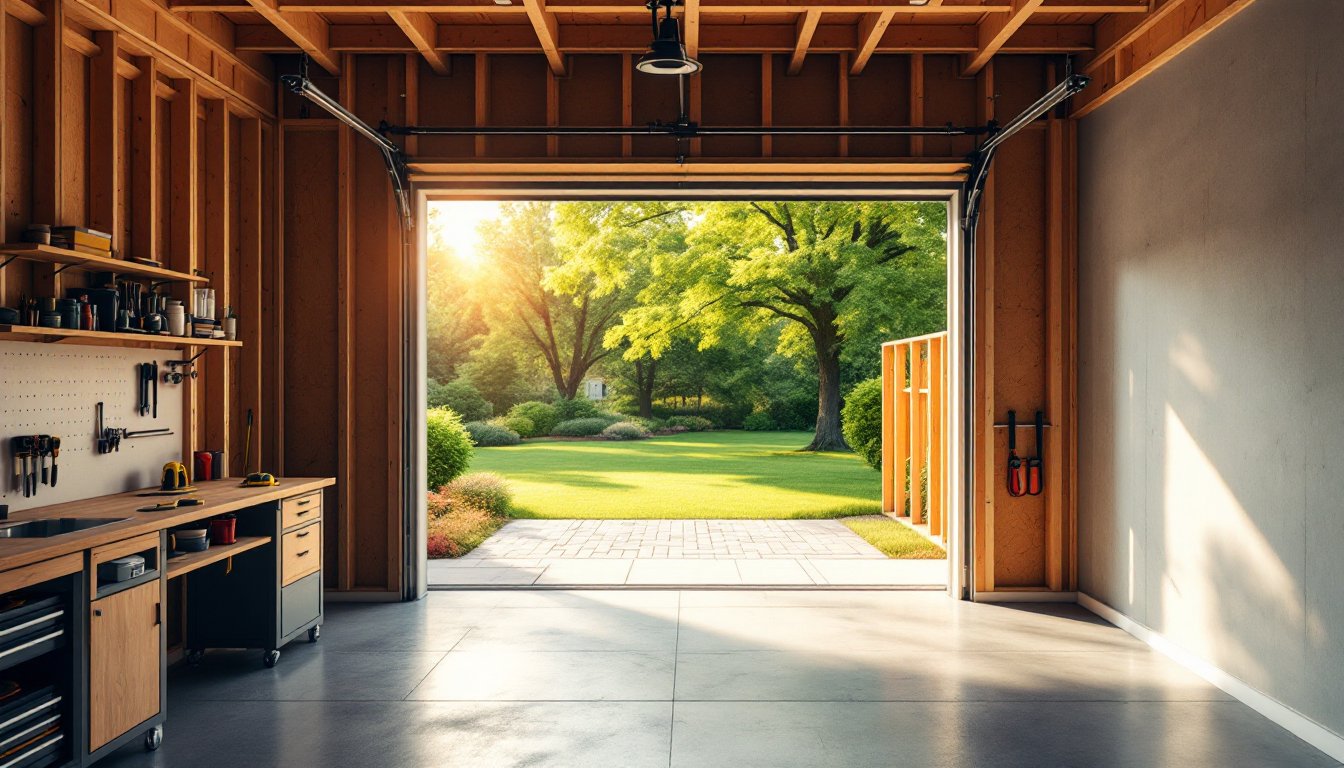
Your <a href="https://jizai-ya.com/garage-conversions-ideas/”>garage is one of the most underutilized spaces in your home. Whether it’s stuffed with seasonal items, old tools, or a forgotten car, that square footage represents real potential. Garage door conversion ideas have exploded in popularity as homeowners recognize the value in transforming this neglected zone into something functional and valuable. In 2026, the trend isn’t just about tacking on an extra room, it’s about smart, practical conversions that match how people actually live. The garage door opening itself becomes the design opportunity: fill it, frame it, screen it, or replace it entirely. Each approach solves different problems and fits different budgets. This guide walks through seven realistic conversion strategies that deliver real value without requiring years of contractor negotiations.
Table of Contents
ToggleKey Takeaways
- Garage door conversion ideas range from budget-friendly cosmetic upgrades like decorative finishes to substantial structural changes like closing the opening for a bedroom, costing anywhere from $300 to $20,000 depending on scope and location.
- Converting the garage door opening into a living space requires a structural engineer’s approval, permits, and proper header replacement, making it the most ambitious but high-impact renovation approach.
- Lightweight conversion options such as adding screens, installing French doors, or creating a covered patio area require minimal permits and can be completed in a weekend or two by most DIYers.
- Transforming your garage into a workshop or home office sidesteps expensive structural work and extensive permitting while maximizing functionality for your specific needs.
- Start any garage conversion project by clearly defining your goal—whether adding living space, improving ventilation, or enhancing curb appeal—before selecting the right approach for your budget and DIY comfort level.
Converting Your Garage Door Opening Into a Living Space
The most ambitious conversion: closing off that big garage door opening and framing it as a proper wall. This works if you’re adding a bedroom, guest suite, or serious living area. Start by understanding what you’re dealing with. That garage door frame is a structural header, usually built to span 8 to 16 feet without internal support. You’ll need to replace it with a structural header that can carry the load above (often a doubled-up 2×10 or 2×12 beam, sometimes larger depending on roof load). This is not a cosmetic project. You’re altering your home’s structure, which means permits, inspections, and likely a structural engineer’s sign-off. Your local building department will want evidence of adequate support before you pour concrete. The rough opening gets framed with standard 2×4 studs spaced 16 inches on center (OC), insulation installed between them, and then drywall hung over. Interior trim and exterior siding follow. Once it’s buttoned up, there’s no trace of the garage door, just a finished wall. A garage door conversion ideas source shows this is the most popular high-impact approach. Budget realistically: structural work, permits, framing, insulation, drywall, finishing, and exterior patching can run $8,000–$20,000 depending on your region and material choices. This isn’t a weekend project.
Creating a Functional Entryway or Covered Patio Area
Want the garage space without removing the door? Consider converting the opening into a semi-outdoor entryway or covered patio. This works especially well if your home sits close to the garage or if you need a sheltered transition zone between exterior and interior. The simplest version: frame out a wall 4–6 feet inside the garage door line, then install a standard exterior door in that framed section. Suddenly you’ve closed off that cavernous opening, created a mudroom-style buffer, and still kept the structural header intact. No permit required if you’re just framing interior walls and adding an interior door. Another option is a pergola or open-air cover: bolt horizontal beams to the header above the garage door opening, run cross-members for partial shade, and you’ve created a gathering space without closing anything off. This preserves the open feel while providing shelter from rain and harsh sun. For a partially enclosed approach, install retractable screens or vinyl curtain panels. They roll or slide closed when weather turns ugly, then disappear when you want the openness. This hybrid approach gives flexibility and costs far less than permanent framing. None of these require major structural work, just smart use of the existing opening. Most homeowners complete these in a weekend or two.
Installing French Doors or Sliding Glass Doors for Natural Light
If you’re keeping the garage as a workspace but want to soften that cave-like feeling, swap the heavy garage door for glass doors. A pair of French doors (traditional 30-inch or 36-inch single panels, hinged and swinging) or a set of sliding glass doors (often 72 inches wide total) transforms the opening into a bright, inviting transition. French doors suit a more finished aesthetic: sliding doors pack more light into a narrower frame profile. Both require basic framing adjustments. The garage door header is already there, so you’re mainly building out a sill (the threshold that doors rest on), installing jambs on either side, and hanging the doors themselves. Measure the opening carefully, standard garage door openings are about 120 inches wide and 84 inches tall, so you’ll likely need a custom set of doors or a framing adjustment. Plan for proper flashing and weatherproofing around the new threshold: water intrusion kills the project before it starts. Interior trim and exterior trim complete the look. Real glass doors cost more upfront ($1,500–$3,500 for a decent set, installed) but add serious curb appeal and create a sense of connection to the outdoors. This works particularly well if your garage opens onto a patio or garden. Permits are usually required because you’re changing the means of egress and weather protection, check with your local authority before ordering doors.
Building a Workshop or Home Office in Your Garage
Garages are natural workshops: concrete floor, simple framing, plenty of wall space for tool storage. Converting one into a dedicated woodshop, fabrication space, or home office sidesteps the need to dramatically alter the space. For a workshop, the garage door stays or gets replaced with something lightweight and functional (a rolling steel door, for example). You add workbenches, tool racks, and dust collection. Flooring can stay concrete, it’s durable and easy to clean, or upgrade to epoxy, which resists staining and gives a more finished feel. Insulation and drywall aren’t mandatory for a workshop, but they reduce dust migration into the house and improve year-round comfort. A home office is trickier because you need climate control, proper lighting, and quiet. Insulating the walls (especially if they face the exterior or a noisy street) makes a real difference. Add a wall-mounted AC unit (mini-split) to stay cool in summer: they’re efficient and don’t require a full HVAC installation. Ceiling and wall treatment absorbs sound better than bare framing. Dedicated circuits for computers and lighting are worth the expense, garage circuits often share load with other equipment. How to Convert Your Garage: A Complete Step-by-Step Guide breaks down this approach in detail. These conversions skip expensive structural work and heavy permitting, making them accessible to most DIYers.
Adding Garage Door Screens for Ventilation and Pest Control
Here’s the lightweight option: keep your existing garage door but retrofit it with screens. A screened garage door lets air flow freely while blocking insects, dust, and debris. Several manufacturers offer screen-door kits that fit inside the existing frame, essentially a grid of aluminum or fiberglass mesh stretched over a lightweight frame. Installation is straightforward: measure the opening, order the screen assembly, and slide or bolt it in place of (or in front of) your existing door panels. Some screen kits run on hinges so they swing open for full access when you need it. Others are permanently installed. Cost runs $300–$1,000 depending on quality and size. No structural work, no permits, no permits complications. The tradeoff: you lose the security and insulation of a solid garage door. This works great if you’re using the garage as a seasonal work area, a summer hang-out space, or a climate-controlled storage zone where air circulation matters more than security. Screens also handle the practical problem of parking a car part-way in and leaving the door open for ventilation without inviting every flying insect into the neighborhood. This is a renter-friendly approach too, since it’s fully removable.
Using Decorative Finishes to Enhance Curb Appeal
Not every conversion is about function. Sometimes the goal is simply to make that big, bland garage door less visually dominant. A decorative garage door panel or a complete door replacement with style upgrades does exactly that. Modern garage doors come in carriage-house designs, glass-and-frame combinations, or sleek contemporary profiles that read like intentional architecture rather than a big metal box. The payoff is curb appeal and resale value, a handsome garage door is one of the first things potential buyers notice. Installation is straightforward if you’re replacing an existing door of similar size: remove the old door, install tracks and a new door unit, adjust the opener, and test the balance. This is heavy work but not technically complex. Hire a professional for balance adjustment and opener setup if you’re not comfortable with springs and pulleys, a misaligned door is dangerous. Finishes matter too. Paint the walls flanking the door a contrasting color, add planter boxes below the opening, or install exterior lighting that accents the entryway. These details are low-cost and make a real difference. Garage Conversion Tips: How to Transform Your Space Successfully offers budget-friendly finish ideas. The beauty of this approach is the reversibility: you’re not committing to permanent structural change, and you can refresh the look as trends evolve.
Conclusion
Garage door conversion ideas span a spectrum from cosmetic upgrades to full structural overhauls. The key is matching the project to your actual needs and budget. A screened door and workshop layout might solve your problem for under $2,000, while closing off the opening for a bedroom requires serious investment and permits. Start by defining the goal: Are you adding usable living space, improving ventilation, or boosting curb appeal? That question alone narrows your options. Then consider your DIY comfort level, local building codes, and realistic timelines. Most successful conversions begin with honest assessment and proper planning, not Pinterest inspiration and wishful thinking. Your garage isn’t wasted space: it’s untapped potential sitting right outside your door.