Your garage doesn’t have to look like every other garage on the block. With the right paint color, that concrete-floored workspace transforms into a space that actually reflects who you are, whether you’re a car enthusiast, woodworker, or just someone tired of staring at dingy walls. Garage paint color ideas have evolved far beyond “whatever was on clearance,” and 2026 is the year homeowners are taking control of these overlooked spaces. A fresh coat of paint is one of the quickest, cheapest ways to breathe life into a garage, and the color you choose sets the tone for everything from how you feel entering the space to how light bounces off the walls when you’re working on a project at 7 AM.
Table of Contents
ToggleKey Takeaways
- Garage paint color ideas range from timeless neutral tones like warm gray and soft white to bold options such as navy and forest green, with the right choice depending on your personal style and garage function.
- Neutral colors like warm gray and greige hide dust effectively, reflect light to brighten dim spaces, and work with any décor style, making them ideal for most homeowners seeking durability and flexibility.
- Bold garage colors work best as accent walls rather than all-over applications, paired with good lighting to avoid making spaces feel cramped or oppressive.
- Color psychology matters in garage design—blues and greens promote focus for detailed work, warm colors energize social spaces, and grays foster productivity without distraction.
- Proper surface preparation, including dust removal, priming, and using concrete-rated or latex paint with appropriate finishes, is essential for lasting results and easier maintenance.
- A typical 500-square-foot garage takes one weekend for prep and painting solo, with professional costs ranging from $500–$1,500, making paint one of the quickest and cheapest ways to transform your space.
Classic Neutral Colors For Timeless Garage Appeal
Why Neutrals Work Best For Most Homeowners
Neutral garage paint colors, warm grays, soft whites, warm beiges, and taupe, remain the backbone choice for a reason. They’re forgiving. They hide dust better than dark colors, reflect light to brighten dim garages, and pair with virtually any décor style without clashing. When you’re deciding between a Shaker-style cabinets or an industrial workbench, a neutral wall won’t fight for attention.
Warm gray is the current favorite among homeowners because it avoids the cold, sterile feel of pure gray while maintaining a clean, modern look. Brands like Sherwin-Williams’ Urbane Gray or Benjamin Moore’s Revere Pewter have become garage staples. These colors work because they’re technically neutral but carry just enough warmth to keep the space feeling inviting rather than institutional.
Off-white and warm white options work similarly. They brighten a naturally dim space and make storage shelving and tools stand out visually. The trick is avoiding pure white, which can feel harsh and shows every mark. Instead, choose whites with a subtle undertone, greige (gray-beige blend) or cream, that maintain brightness without the clinical feel.
For two-color schemes, many homeowners paint the walls a soft neutral and the trim, doors, or lower third a contrasting darker shade. This breaks up monotony and creates visual interest without the commitment of bold color. Paint coverage for walls typically runs 350-400 square feet per gallon, so calculate your wall area (length × height) and grab an extra half-gallon for touch-ups.
When choosing neutral paint, grab sample cards and test them on your actual walls in different lighting conditions. Natural light, fluorescent work lights, and even the time of day shift how colors look. Apply samples as roughly 2-foot × 2-foot sections and observe them over a few days.
Bold And Modern Garage Paint Colors
Choosing A Bold Color That Won’t Feel Dated
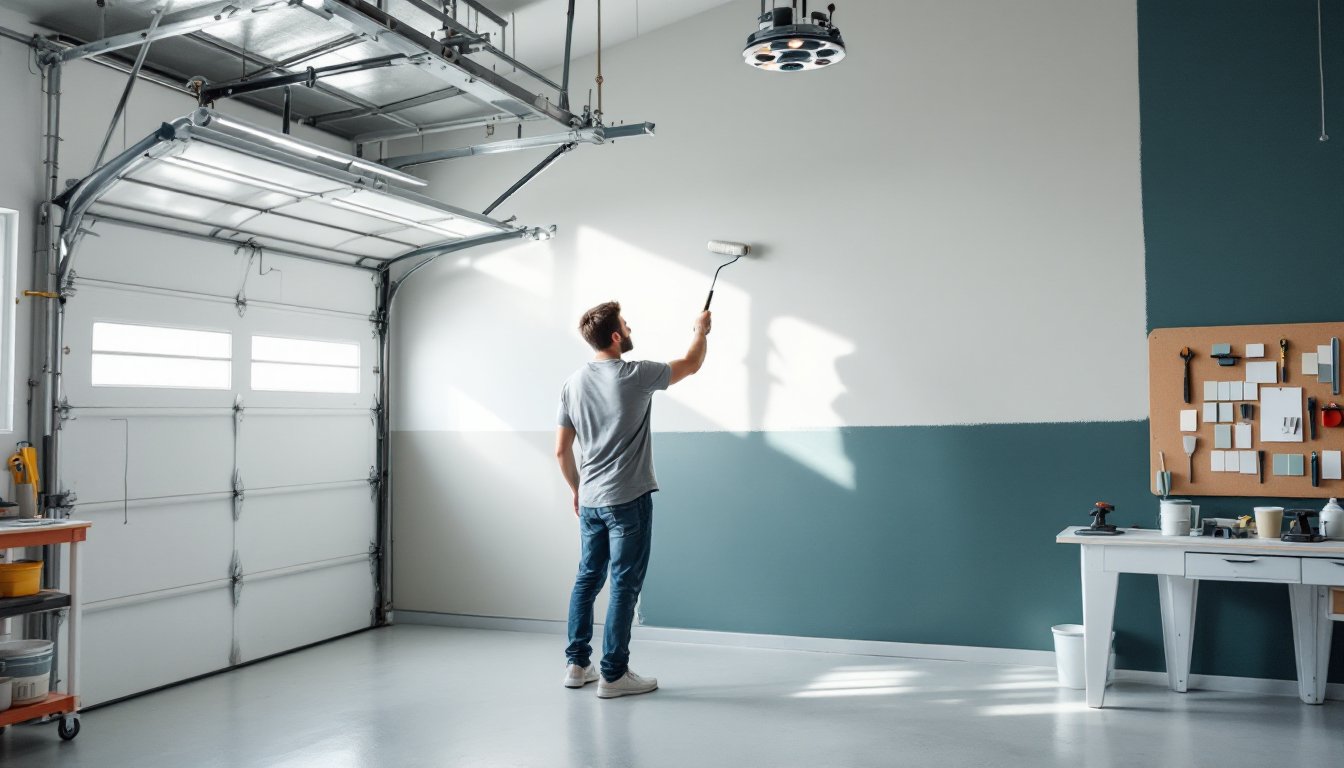
Bold doesn’t mean reckless. The trick is choosing a saturated color that aligns with your personal taste and complements your home’s exterior, then using restraint in application. Instead of painting all four walls in navy blue or forest green, consider using it as an accent wall, say, the wall behind your workbench or the garage door wall, and keeping the remaining walls neutral.
Deep navy and forest green have staying power because they’re sophisticated and tie into nature-inspired design trends that don’t shift dramatically year to year. Charcoal, matte black (popular for modern industrial garages), and slate gray create drama without feeling trendy. If you want something warmer, warm terracotta, rust orange, or mustard yellow add personality while staying rooted in natural color palettes.
The risk with bold colors appears when they’re applied to all walls in a small, windowless space, they shrink the room visually and can feel oppressive. Test bold colors in sample sections and view them at different times of day. Many bold colors shift under artificial lighting.
Bold garage colors also work well when paired with garage conversion ideas that add windows or natural light, because light dramatically improves how saturated colors feel. A dark teal wall in a dim garage might feel claustrophobic, but the same color with skylights or a windowed wall feels inviting.
When committing to bold color, use high-quality semi-gloss or satin-finish paint. Glossier finishes are easier to wipe down and repaint if you change your mind in three years. Matte or flat finishes hide imperfections but trap dust and are tougher to clean, not ideal for a working garage.
Consider the 60-30-10 rule: 60% neutral base, 30% secondary color, and 10% accent. Your garage walls might be 60% light gray, 30% a bold accent wall, and 10% accent details like trim in white or a complementary tone.
How To Use Color Psychology In Garage Design
Color psychology isn’t mystical, it’s rooted in how our brains respond to wavelengths and cultural associations. In a garage context, think function: Does this color energize you, calm you, or help you focus?
Blues and greens promote calm and focus, making them ideal for garages where you’re concentrating on detailed work or problem-solving. Woodworkers and hobbyists often gravitate toward these colors because they reduce mental fatigue during long sessions. Navy and forest green are popular here because they’re also practical, they hide stains and grease spots better than lighter shades.
Warm colors like red, orange, and yellow energize and stimulate activity. A garage painted in warm tones often feels more inviting and social, think of a garage that doubles as a hangout space where friends gather for projects. But, these colors can feel overwhelming in small spaces, so reserve them for accent walls or trim.
Grays and neutral tones foster productivity and balance. They don’t distract, which is why they’re the default in professional workshops. Gray is the Switzerland of colors: it steps back and lets your tools, projects, and personality take center stage.
If your garage is also a garage conversion project or doubles as living space, color psychology becomes even more relevant. A bedroom conversion painted in soft blue promotes rest. A hobby studio in warm white or pale yellow boosts creativity.
Don’t overthink it, choose a color that genuinely makes you feel good when you walk in. Your gut response matters more than design theory. If a color makes you smile or feel ready to tackle projects, it’s the right choice.
Practical Tips For Painting Your Garage
Before you crack open a paint can, understand that garage painting success hinges on prep work, not paint quality.
Surface Prep: Garages typically have concrete or drywall walls. Concrete requires a primer and paint rated for concrete: drywall needs standard primer. Remove loose paint, fill holes with spackling compound (for drywall) or concrete patching compound, and sand lightly. Dust everything thoroughly, cobwebs, dirt, and grease prevent paint adhesion.
Choose the Right Product: For concrete floors and walls, use concrete-rated acrylic latex paint or epoxy, which resists moisture and staining better than standard paint. For drywall, standard interior latex works fine, though a stain-blocking primer helps if you’re covering dark or discolored walls. Avoid oil-based paints in garages with vehicles or appliances that run, fumes are a safety concern.
Primer Application: Even with quality paint, primer is non-negotiable on bare concrete, stained areas, or when covering dark colors. One coat of primer plus two coats of paint is standard. Don’t skip it hoping to save time, you’ll end up repainting within a year.
Equipment: For large, flat surfaces, use a paint roller with a 3/8-inch nap (for drywall) or 1/2-inch nap (for textured concrete). A brush handles trim, corners, and around fixtures. For ceilings, a roller on an extension pole saves your shoulder. Paint quality matters, cheap brushes shed bristles into your finish. Splurge on decent brushes and rollers.
Safety: Wear NIOSH-approved respirator if using epoxy or oil-based products. Garage ventilation is often poor, and paint fumes accumulate. Use safety glasses to protect against splatter, especially when painting overhead. If you have asthma or respiratory sensitivity, err toward low-VOC or zero-VOC latex paints. The cost difference is small: the breathing comfort is worth it.
Application: Paint in thin, even coats rather than one thick coat. Two coats of quality paint beat one thick coat that runs or peels. Work from top to bottom, ceiling, walls, trim, baseboards. Making practical DIY improvements like painting your garage shows that consistent, methodical work yields the best finish.
Drying and Re-Entry: Don’t rush the process. Let paint cure fully (usually 24-48 hours) before storing vehicles or running power tools that kick up dust. Partial cure means dust and debris stick to slightly tacky paint.
Estimated Timeline: A 500-square-foot garage (assuming 2.5-car standard size) takes one weekend for prep and painting if you’re working solo. Plan 8-10 hours total. If hiring, quotes typically run $500–$1,500 depending on wall condition, color, and region, get three estimates.
Conclusion
Choosing a garage paint color boils down to two questions: What makes you feel good, and what’s practical for your use? Neutrals win for longevity and flexibility. Bold colors win for personality and energy. The real payoff happens when you walk into a freshly painted space that actually reflects the way you use it, whether that’s a precision workshop, hobby studio, or everyday parking spot that finally looks intentional. Start with a sample card, trust your gut, prep like a pro, and you’ll end up with a garage that’s genuinely worth spending time in.