Your garage door is probably one of the last things you think about until it stops working. If you’re still using a traditional garage door opener with a wall-mounted button and a single remote, you’re missing out on what modern smart garage door openers can do. A smart garage door opener transforms your existing door into a connected device that you can control from anywhere via your smartphone, monitor in real time, and integrate with your home automation system. Whether you’re worried about security, convenience, or just want to modernize your home, upgrading to a smart system is one of the most practical and affordable smart home investments available.
Table of Contents
ToggleKey Takeaways
- A smart garage door opener lets you control and monitor your garage from anywhere via smartphone, offering convenience and security upgrades over traditional systems.
- Retrofit controllers are affordable and easy to install (30 minutes to an hour), while full replacements offer better long-term safety features but require professional installation.
- Real-time notifications and activity logs allow you to verify your garage is closed and catch unauthorized access immediately, improving home security.
- Verify compatibility with your existing opener type and home automation platform (Alexa, Google Home, or HomeKit) before purchasing a smart garage door system.
- Choose mid-range models from established brands with solid track records for software updates and customer support rather than budget options or overly complex premium models.
- Maintain smart openers by keeping sensors clean, updating the mobile app regularly, testing safety features quarterly, and monitoring Wi-Fi connection strength.
What Makes a Garage Door Opener Smart?
A traditional garage door opener is just a motor that opens and closes the door. A smart garage door opener adds Wi-Fi connectivity, remote control via an app, and sensors that tell you whether your door is open or closed. Some models replace your existing opener entirely, while others are retrofit devices that bolt onto your current opener and add smart functionality without replacement.
Most smart openers use one of two approaches. First, there’s the full-replacement model, where you remove the old unit and install a new Wi-Fi-enabled motor that meets modern standards and often includes safety features like automatic closing and obstruction detection. Second, there’s the smart accessory model, where you keep your existing opener and add a controller device that communicates via an app and sensors. The retrofit approach costs less upfront but may not integrate as smoothly with other smart home devices.
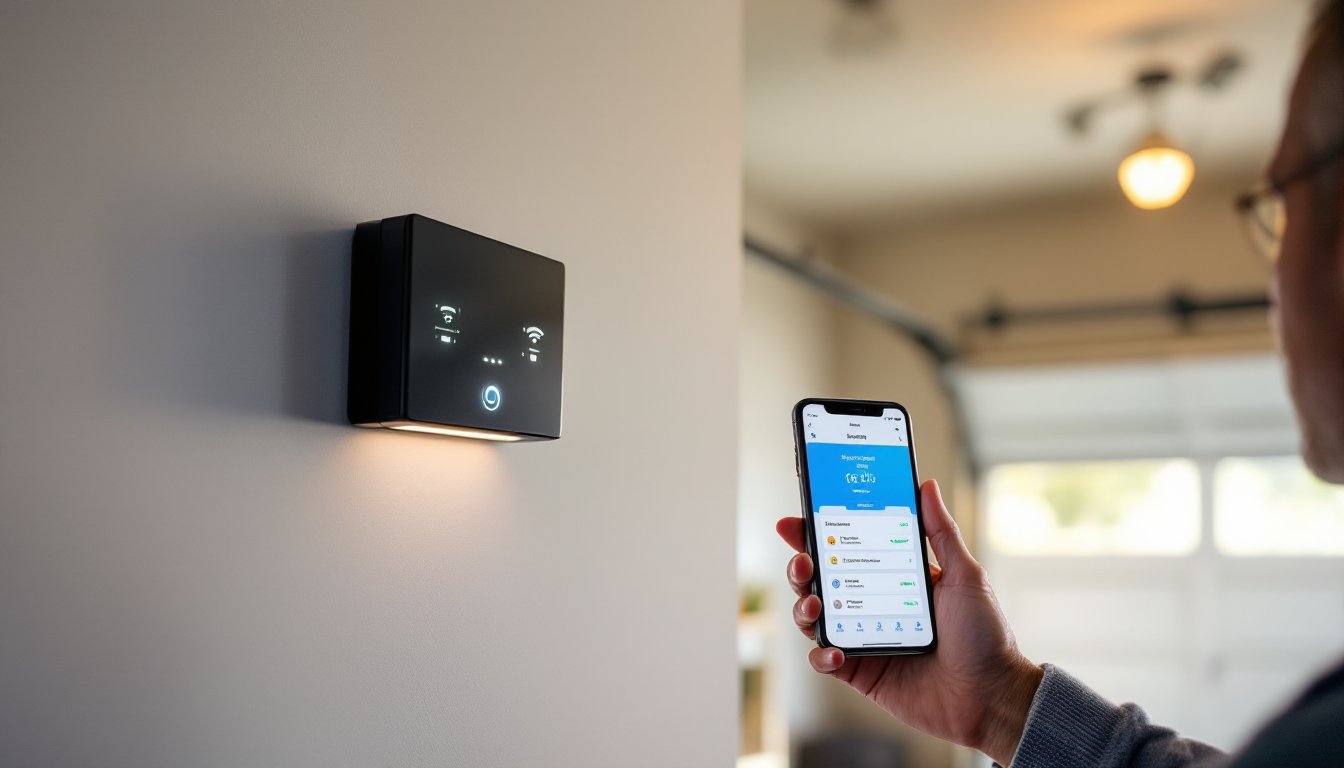
These systems typically sync with your home Wi-Fi network and communicate through a dedicated mobile app or through broader home automation platforms like Amazon Alexa, Google Home, or Apple HomeKit. Real-time alerts notify you when the door opens or closes, and most models include activity logs so you can see who opened it and when. The best systems also offer two-factor authentication and encrypted communication to keep your garage secure.
Key Benefits of Upgrading to a Smart System
Remote Access and Mobile Control
The primary benefit of a smart garage door opener is the ability to control your door from anywhere. Forgot to close the garage before leaving for work? Open your phone, confirm the door is actually closed, and lock it with a tap. If a family member is running late, you can unlock the door for them without sharing physical key codes. This is especially useful for contractors, delivery drivers, or in-laws who need temporary access without handing them a remote.
Mobile control also eliminates the frustration of losing or forgetting a remote. Instead of managing multiple remotes and wall buttons, everyone in your household can use their phone. Most apps allow you to grant temporary access codes or permanent permissions to specific family members, and you can revoke access at any time without changing hardware.
Real-time notifications are equally valuable. You’ll receive an alert on your phone the moment someone opens or closes the door, and you can check a timestamp log of every instance. This helps you catch unauthorized access immediately rather than discovering problems later.
Enhanced Home Security Features
Smart garage door openers significantly improve home security in multiple ways. A closed garage door is harder to break into than an open one, and the ability to verify it’s closed from anywhere means you’re never lying awake wondering if you remembered to close it before leaving town. Advanced units feature automatic closing timers, you can set the door to close automatically after 15 or 30 minutes if you forget, preventing accidental security gaps.
Integration with broader smart home systems adds another layer of protection. You can create routines where closing your front door also triggers the garage door to lock, or set the garage to lock automatically at a certain time each evening. Some systems even coordinate with smart lighting or cameras, so the garage light turns on when the door opens at night.
Security features like two-factor authentication, encrypted cloud connectivity, and activity logs make it harder for someone to hack your garage door. Unlike older openers that use simple rolling-code remotes, modern smart systems update their security protocols regularly and store data on encrypted servers. When choosing a model, verify that the manufacturer offers regular security updates, this matters as much as the initial feature set.
Installation and Compatibility Considerations
Before buying a smart garage door opener, check your current setup. Most modern garage door openers installed in the last 20 years can accept a smart retrofit kit, but older units may not. Measure the rail type (most use a vertical or angled rail) and note the brand of your existing opener. If you have a chain-drive opener (the noisiest type), a belt-drive (quieter), or a screw-drive (least common), retrofit kits need to match your rail configuration.
If your garage door opener is over 25 years old or has been damaged or repaired multiple times, replacing it entirely might be smarter than retrofitting. Replacement units offer better safety features, like automatic reversing if they detect an obstruction, and they’re often more reliable long-term.
Compatibility with your home automation system also matters. If you’re already invested in Alexa, HomeKit, or Google Home, confirm that your chosen smart opener integrates with your platform. Most modern smart openers work with at least two major ecosystems, but some budget models may only support one or require a separate hub.
Installation difficulty depends on whether you’re retrofitting or replacing. A retrofit typically takes 30 minutes to an hour and involves mounting a controller box, running wires, and connecting to Wi-Fi, many homeowners can handle this. Replacing an entire opener requires disconnecting the old unit, removing springs (which are under extreme tension), and installing new mounting hardware. Spring replacement and major motor work should be handled by a licensed garage door technician, as springs can cause serious injury if mishandled. The cost of professional installation typically ranges from $150 to $300, but it’s worth it for safety and proper calibration.
How to Choose the Right Smart Opener for Your Home
Start by determining your budget and whether you want a full replacement or a retrofit accessory. Retrofit controllers typically cost $100 to $300, while full replacement openers range from $300 to $800 depending on features and brand. Don’t just pick the cheapest option, a well-reviewed model from a reputable manufacturer will include better security, more reliable app connectivity, and longer customer support.
Next, verify compatibility. Check your garage door’s age, rail type, and existing opener brand. Search your opener model online along with “smart retrofit” to see which kits work with your system. If replacing, confirm the new unit supports your home automation platform.
Read recent reviews on tech sites like Tom’s Guide, CNET, and Digital Trends to see real-world testing and user feedback. Look for comments about app reliability, setup difficulty, and customer service responsiveness, these matter more than glossy marketing claims.
Consider the features you actually need. Do you want two-way audio so you can speak to delivery drivers? Do you need integration with outdoor cameras? Will you use voice control frequently? Premium models include these extras, but a basic smart opener with app control and notifications covers 90% of use cases for most homeowners.
Finally, think about future-proofing. Choose a brand with a solid track record of software updates and multi-year customer support. Avoid smaller brands that might disappear in a few years, leaving you with an unsupported device. The best value often comes from mid-range models from established smart home brands rather than rock-bottom budget options or overly complex premium models. If you’re considering adding other smart home features, you can also explore how to convert your garage into additional living space once your door opener is sorted.
Maintenance Tips for Long-Lasting Performance
Smart garage door openers require minimal maintenance compared to traditional models, but a little care extends their lifespan. Keep the sensors clean and aligned. Most smart systems use infrared sensors mounted on the sides of the garage door opening to detect obstructions. Dust, spider webs, or misalignment can trigger false alerts or prevent the door from closing. Clean them monthly with a soft cloth and ensure they’re pointing at each other.
Check your Wi-Fi connection periodically. If your garage is far from your router, signal dropouts can cause app delays or failed commands. Consider a Wi-Fi extender or mesh network if your garage is at the edge of coverage.
Keep the mobile app and any connected smart home hubs updated. Manufacturers regularly release security patches and performance improvements. Enable automatic updates if the app offers that option, or manually check for updates monthly.
Inspect the garage door itself every few months. Listen for unusual grinding sounds when opening or closing, which can indicate worn rollers or misaligned tracks. If you hear rubbing or grinding, have a garage door technician inspect it, fixing the door mechanics is separate from maintaining the smart opener.
If your smart opener includes batteries for the backup power or remote access, replace them annually or when the app alerts you. Some units have sealed batteries that last the lifetime of the device, but many use standard AAs or 9-volts that need regular swaps. Finally, test the automatic closing timer and obstruction detection features quarterly to confirm they’re working. These safety features are critical, so don’t ignore alerts or disable them for convenience.