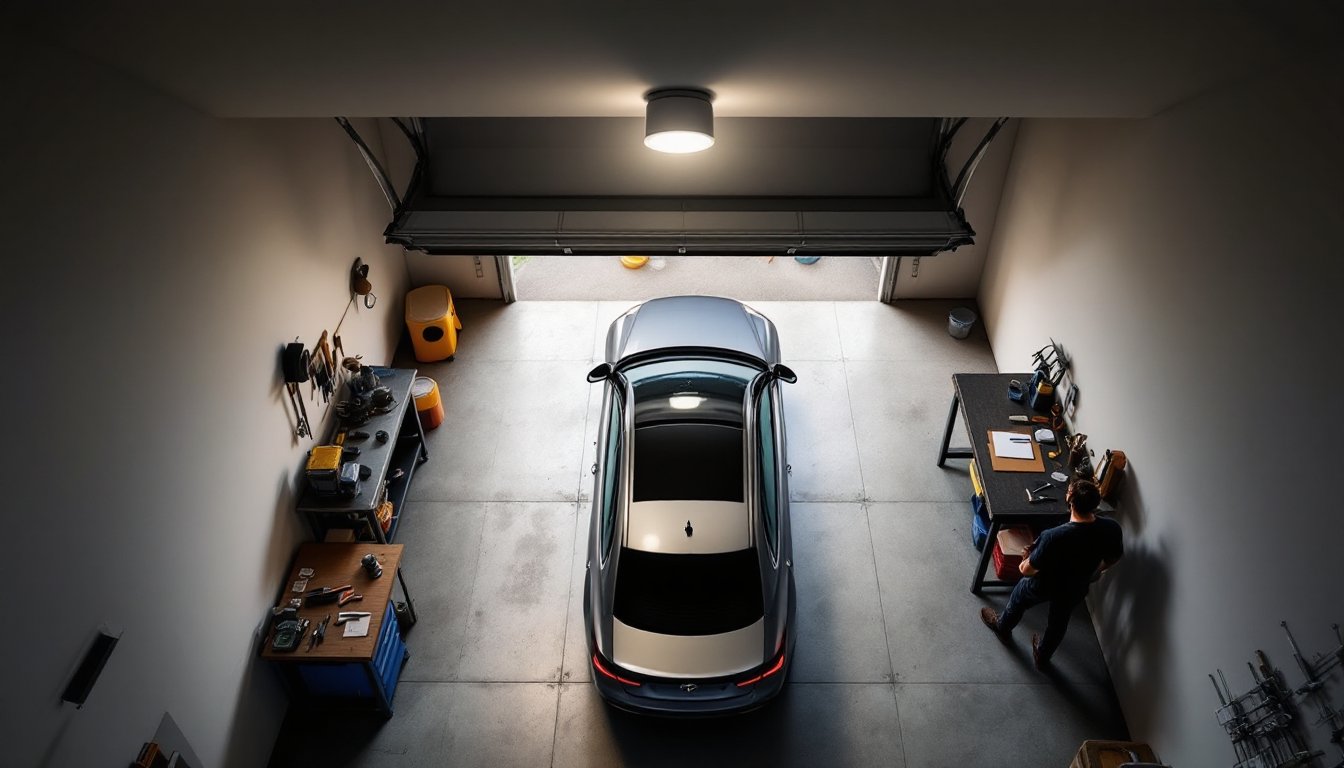
Fumbling for a light switch in the dark while your hands are full of tools, groceries, or kids? A garage motion sensor light solves that problem instantly. These fixtures detect movement and illuminate automatically, turning your garage into a safer, more functional space without requiring you to flip a switch. Whether you’re pulling in late at night, searching for a wrench, or unloading the car, a motion sensor light for your garage adapts to your habits and cuts energy waste by turning off when no one’s around. In this guide, you’ll learn what these lights are, why they’re worth installing, and how to pick the right one for your setup.
Table of Contents
ToggleKey Takeaways
- A garage motion sensor light automatically illuminates when movement is detected and turns off after a period of inactivity, eliminating the need to manually flip switches while your hands are full.
- Motion sensor lights significantly reduce energy costs by preventing lights from staying on in empty garages, with savings compounding across multiple fixtures or spaces over time.
- The main installation options include hardwired LED ceiling fixtures ($150–$300), battery-powered or plug-in units ($20–$80), and solar-powered lights ($25–$100), allowing you to choose based on budget, renter status, and technical comfort level.
- Position motion sensors 6 to 8 feet high with clear line of sight, adjust sensitivity to medium to avoid false triggers, and set on-duration based on your routine to optimize performance and prevent nuisance activations.
- Brightness requirements depend on your use case—1,500–2,000 lumens suffices for quick retrieval or parking, while detailed work like woodworking requires 3,000+ lumens, so assess your specific garage activities before purchasing.
What Is a Garage Motion Sensor Light and How Does It Work?
A garage motion sensor light combines a standard light fixture with built-in motion detection technology. When movement is detected within the sensor’s range, the light turns on automatically. After a set period of inactivity (typically 5 to 30 minutes, depending on the model), it switches off to conserve energy.
Most motion sensors use one of two detection methods: infrared (passive infrared or PIR) or microwave. PIR sensors detect body heat, making them ideal for garages where you’ll be moving around briefly. Microwave sensors emit electromagnetic waves and sense reflections, which means they can detect motion through walls and work better in cluttered spaces. Some premium models combine both technologies for improved accuracy.
These lights come in several mounting styles. Flush-mount fixtures screw directly to the ceiling or wall and are popular for finished garage ceilings. Plug-in motion sensor bulbs replace standard bulbs in existing fixtures, making them a renter-friendly option. Hardwired units offer the most professional installation but require running electrical lines and connecting to your home’s circuit panel. All three options integrate motion sensing without requiring smart home systems or apps, just turn them on and they work.
Key Benefits of Installing Motion Sensor Lighting
Energy Savings and Convenience
The biggest win with motion sensor lighting is energy efficiency. Garage lights are often forgotten when someone leaves in a hurry, but a sensor-equipped fixture turns itself off automatically. This can trim electricity costs, especially if you’re running multiple lights or leaving the garage empty for hours. Over a year, the savings add up, particularly in homes with multiple garages or detached structures.
Convenience is the second major benefit. Your hands are free when you enter, whether you’re carrying boxes, tools, or children. No more fumbling for a wall switch in the dark. The light meets you at the threshold, and you can set the duration to match your typical garage time (loading the car takes 10 minutes: searching for a specific tool might take 20).
Safety improves too. Well-lit garages reduce trip hazards and make it harder for unwanted visitors to linger unnoticed. Motion-activated lighting also creates a deterrent effect, when lights suddenly illuminate an empty driveway or garage, it signals occupancy. Modern motion sensor lights also offer flexible brightness options, so you can run at 50% power for quick trips and full brightness for longer projects.
Types of Motion Sensor Lights for Garage Spaces
Understanding the main categories helps narrow your choice.
LED Ceiling Fixtures are the most permanent option. These hardwired units mount directly to your garage ceiling (typically 8 to 10 feet high for even coverage) and are wired into your electrical panel. They deliver bright, consistent illumination and last 25,000+ hours thanks to LED technology. Expect to pay $80–$300 depending on wattage, finish, and sensor quality. Installation requires running electrical wire through walls or ceiling cavities and can demand a permit in some jurisdictions: hiring a licensed electrician is the safest route.
Wall-Mount Motion Sensor Lights are smaller and ideal for corner coverage or entryway lighting. These can be hardwired or, in some cases, battery-powered. A battery-powered wall-mount runs $30–$80 and installs in minutes using just screws and anchors, no electrical work needed. Hardwired versions cost $60–$200 and offer brighter, longer-lasting performance.
Motion Sensor Light Bulbs screw into existing fixtures and range from $20–$60 each. These are perfect if you already have ceiling or wall fixtures in place. The trade-off: they’re limited to the brightness of the existing fixture and may not survive as long as dedicated LED units because the sensor and ballast operate inside a smaller housing with less heat dissipation.
Solar-Powered Motion Lights use rechargeable batteries charged by daylight and cost $25–$100. These are excellent for detached garages or outdoor garage walls where running electrical is impractical. But, they’re typically less bright than hardwired options and require clear sunlight exposure. Reviews of Aootek solar outdoor flood lights show the technology works well for moderate-duty applications, though they’re better suited to outdoor perimeter lighting than deep garage work spaces.
Installation Essentials and Best Practices
Before you buy, assess your garage’s layout and existing electrical setup.
For hardwired ceiling fixtures, map out where you want lights. A single 3000–4000 lumen fixture covers a two-car garage adequately if centered on the ceiling: larger garages or workshops benefit from two fixtures positioned to eliminate dark corners. Confirm your garage has an available circuit and that you’re comfortable running new wire through existing walls. Most building codes (based on the National Electrical Code or NEC) require 3 watts per square foot minimum for garage work areas, and motion sensor wiring must meet the same standards as regular lighting circuits. If you’re unsure, call a licensed electrician, a typical hardwired installation runs $200–$500 including labor.
For plug-in or battery-powered options, mounting height matters. Position the sensor 6 to 8 feet high on a wall or corner where it has a clear line of sight to where movement will occur. Avoid pointing sensors at heating vents, windows, or direct sunlight, which can trigger false activations. Test the range (typically 15–30 feet) by walking through your garage after installation.
Sensitivity and duration adjustments are built into most modern units via small dials or switches on the sensor housing. Set sensitivity to medium unless you’re in a high-traffic area: too high and you’ll get false triggers from passing cars or swaying trees. Adjust the “on” duration to match your routine, 10 minutes for quick trips, 20–30 for workshop sessions.
Avoid common mistakes: don’t install sensors directly above heat-producing equipment or point them outdoors where rain or extreme temperature swings will degrade them faster. Check product ratings for IP (ingress protection) ratings: garage sensors should be at least IP44 to handle dust and minor moisture.
Choosing the Right Motion Sensor Light for Your Garage
Start with your budget and installation comfort level. If you rent or prefer zero electrical work, a motion sensor light bulb or battery-powered wall-mount is your answer. Budget $30–$80 for either. If you own and want a permanent, high-performance solution, invest $150–$300 in a hardwired LED ceiling fixture.
Next, evaluate your garage’s existing infrastructure. Does it have a finished ceiling and a nearby electrical outlet? Hardwired fixtures work seamlessly. Is the ceiling exposed joists or does it lack power access? A solar or battery option makes sense. Do you need to cover multiple disconnected spaces (garage + outdoor driveway)? Buy separate units rather than overextending a single sensor’s range.
Brightness matters for your actual use. If you’re just retrieving items or parking, 1500–2000 lumens is adequate. If you’re doing woodworking, repairs, or other detailed tasks, aim for 3000+ lumens. Remember that lumens decrease over time, so buy slightly brighter than you think you need.
Look for adjustable sensors with dimmable options. Quality fixtures let you dial in sensitivity and duration, reducing nuisance activations and extending the on-time only when you’re actually there. Read verified customer reviews on platforms like HomeAdvisor and Digital Trends to see how specific models perform in real garages, not just showroom claims.
Consider future expandability too. If you think you’ll add a workshop or second garage later, choose a sensor type that’s easy to replicate. Hardwired fixtures are locked to one location, but battery or solar units can move or expand more easily. Finally, check warranty coverage: reputable manufacturers offer 2–5 year warranties, which reflects confidence in the product.
Conclusion
A motion sensor light for your garage is a practical upgrade that pays dividends in convenience, safety, and energy savings. Whether you install a simple battery-powered unit or commit to hardwired LED ceiling fixtures, the key is choosing the right type for your space and setup. Start with your budget, measure your garage, then match it to the right fixture. Once installed, adjust sensitivity and duration to your routine, and you’ll wonder how you ever managed without it. The best garage motion sensor light is the one you actually use, so pick one that fits your lifestyle and your willingness to install it yourself or hire help.