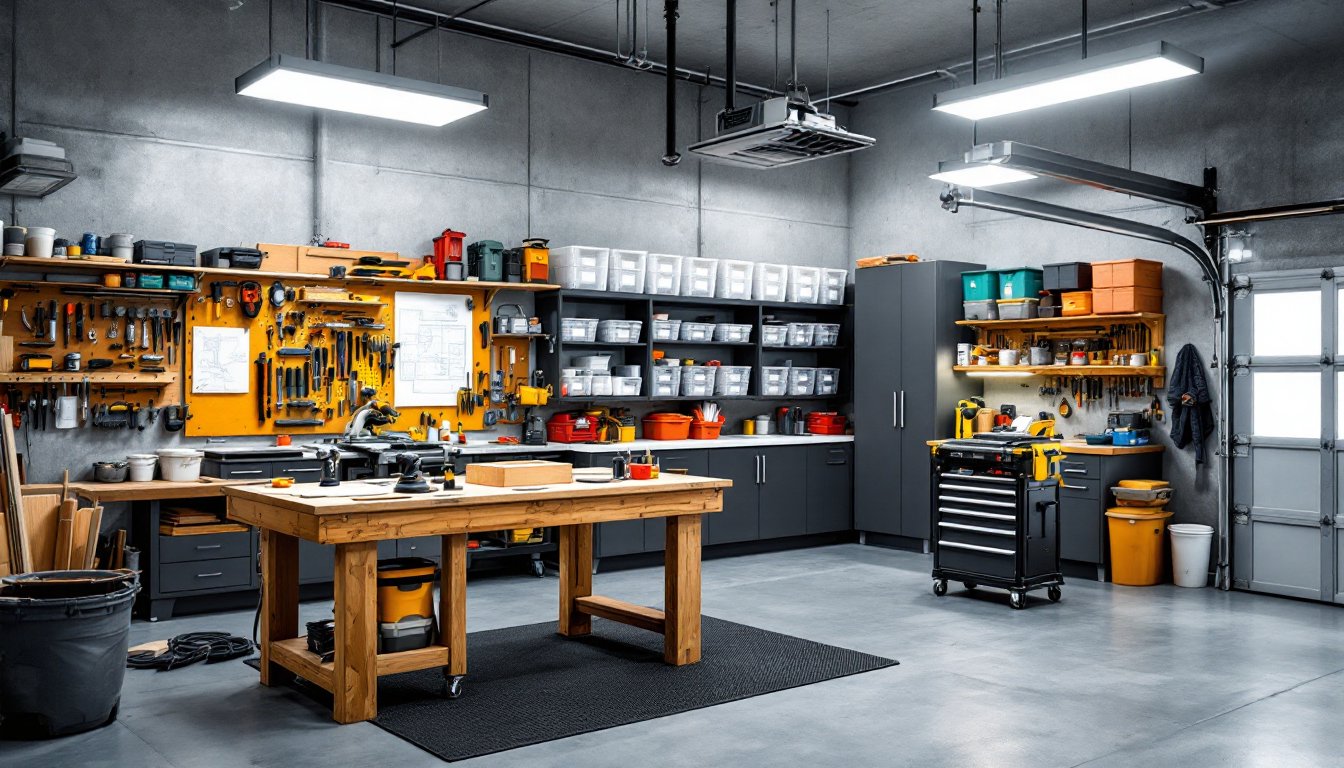
Transforming a garage into a functional man cave garage workshop is one of the most rewarding DIY projects a homeowner can tackle. Whether you’re a weekend woodworker, a car enthusiast, or someone who just needs a dedicated space to tinker and build, your workshop should be organized, well-lit, and equipped for whatever projects you dream up. The good news? You don’t need a sprawling commercial shop to create an effective workspace. With smart planning, the right tools, and a few strategic upgrades, even a standard two-car garage can become a productive haven that makes every project easier and more enjoyable.
Table of Contents
ToggleKey Takeaways
- A well-planned man cave garage workshop starts with a solid layout that divides your space into functional zones while maintaining clear pathways for safety and workflow efficiency.
- Invest in essential tools and safety gear first—a quality workbench, basic power tools, hand tools, and protective equipment—before expanding into specialized equipment.
- Vertical storage solutions like wall-mounted cabinets, pegboards, and ceiling racks maximize usable space without eating into your floor area.
- Adequate lighting with at least 50 lumens per square foot, dedicated electrical circuits, and climate control are critical for a functional and comfortable workshop.
- Transform your garage workshop into an inviting space by adding personal touches like paint, flooring upgrades, display areas, and comfort amenities that make you want to spend time there.
- Leave 20% of your storage capacity empty and avoid daisy-chaining power strips to ensure your workshop remains safe, navigable, and scalable for future projects.
Planning Your Garage Workshop Layout
The foundation of any successful workshop is a solid layout plan. Start by measuring your garage and sketching it to scale on graph paper, yes, the old-school way still works best for visualizing space. Identify permanent fixtures: the entry door, windows, overhead door, and any utility lines (water, electric, gas). These aren’t negotiable: everything else arranges around them.
Divide your space into functional zones. Most workshops benefit from a primary work station (workbench), a tool wall or pegboard, storage racks, and sometimes a project assembly area. Think about your workflow: materials come in, get cut or assembled, then finished items go out. Don’t create a layout that forces you to walk across the shop ten times per project.
Consider traffic flow, too. You’ll need clear pathways to the door, windows, and emergency exits. Cramming every square foot with equipment is a safety hazard and makes the space feel claustrophobic. Leave at least 3 feet of clearance down the center for maneuvering larger materials or projects. If you’re serious about garage conversion ideas, layout planning is where professionals start before moving tools or building anything.
Essential Tools and Equipment to Invest In
You don’t need every tool ever made, but certain pieces are non-negotiable for a functional workshop. Prioritize a quality workbench (solid wood or metal, 2–4 feet long minimum), a miter saw or circular saw for crosscutting, a power drill, a jigsaw, and a random orbital sander. These handle the bulk of common projects. Add a table saw only if you’re doing regular rip-cuts or if space allows, it demands dedicated real estate.
Hand tools matter, too. Invest in a good hammer, screwdrivers (multiple sizes), wrenches, levels, tape measure, and clamps. Cheap clamps are a false economy: they slip and ruin work. When starting out, buy mid-range quality rather than the cheapest option, it compounds into better results.
Safety gear is non-negotiable: safety glasses, work gloves, hearing protection, and a dust mask or respirator. If you’re using power tools regularly, a shop vac prevents respiratory hazards and keeps the floor clear.
Creating Functional Work Zones
Organize tools by task. A primary work zone centers on your workbench, surrounded by hand tools within arm’s reach on a wall-mounted pegboard or magnetic strips. A power tool station houses your stationary or frequently used equipment, saw, drill press, or sander, with a dedicated outlet. A storage zone keeps materials, fasteners, and finished projects organized vertically to save floor space.
Wall space is precious. Pegboards with hooks are adjustable and cost-effective, but wall-mounted magnetic strips work better for metal tools. Resources like Ana White offer free plans for DIY workbenches and tool storage solutions that fit smaller spaces. Label everything, your future self will thank you when searching for that specific bolt size at 10 PM.
Storage Solutions That Maximize Space
Vertical storage is your best friend in a workshop. Wall-mounted cabinets, shelving units, and pegboards double usable storage without eating floor space. Install shelves at varying heights: lower shelves for heavy items and equipment, middle shelves for materials you access frequently, and upper shelves for seasonal or rarely used gear.
Drawers in a rolling tool cart or storage cabinet keep fasteners, bits, blades, and small parts organized and portable. Clear plastic bins with labels beat stacking mystery boxes. A lumber rack along one wall, simple 2x4s bolted to studs, stores sheet goods and long stock vertically. If you’re working on garage conversion tips, efficient storage is what transforms a cluttered space into a professional workshop.
Don’t overlook overhead space. Ceiling-mounted storage racks or wall-mounted fold-down shelves keep seasonal items, protective gear, and bulky equipment accessible but out of the daily workflow. Just ensure anything overhead is secured properly, a falling tool is dangerous and expensive.
One final tip: leave about 20% of your storage capacity empty. A workshop that’s packed to the gills is hard to navigate and impossible to expand into.
Lighting, Power, and Climate Control
Inadequate lighting is the most common workshop complaint. Invest in bright LED overhead panels (at least 50 lumens per square foot, the spec used in commercial shops). Add a task light or two over your workbench: shadows hide mistakes and invite accidents. LED fixtures last longer and run cooler than older fluorescents or incandescent bulbs, saving money over time.
Electrical infrastructure matters. Your garage likely has one or two outlets: a workshop needs way more. 20-amp circuits are standard for shops: if running power tools simultaneously, dedicated circuits prevent breakers from tripping. Adding a sub-panel and outlets may require a licensed electrician and a permit, but it’s safer and future-proofs your setup. Avoid daisy-chaining power strips, it’s a fire hazard. Use heavy-duty extension cords rated for your tool’s amperage if permanent wiring isn’t yet done.
Climate control keeps materials and you comfortable. Concrete floors pull moisture in humid climates, warping wood and rusting tools. A dehumidifier (especially in summer) or simple ventilation fan helps. Insulating your garage or adding a space heater for winter work extends your project season. Essential garage conversion tools often include these climate considerations because workshops are only useful year-round if they’re tolerable year-round.
Adding Comfort and Style to Your Workspace
Your workshop should feel inviting, not industrial. Paint walls in a light neutral color, white or soft gray, to reflect light and make the space feel larger. Epoxy flooring is pricey but worth it if you’re making a long-term investment: it’s durable, easy to clean, and looks professional. If epoxy isn’t in the budget, interlocking rubber tiles or simple concrete sealer get the job done.
Personal touches matter. Mount a pegboard for displaying finished projects, add a small shelf for books or reference manuals, or hang inspiring photos of projects you want to tackle. A radio or Bluetooth speaker makes the space feel less like a dungeon. Many popular garage workshop ideas include areas for display, rest, and inspiration, a stool or small bench where you can sit, sketch ideas, or just take a break.
Consider a small beverage cooler or coffee maker if you’re spending long hours there. These aren’t luxuries: they reduce shop trips and keep you focused. Finally, a fire extinguisher and first aid kit mounted prominently are safety and peace-of-mind essentials. How to convert your garage into a true workshop means thinking beyond tools, it’s about creating a space you actually want to spend time in.
Conclusion
A well-planned man cave garage workshop becomes one of your favorite spaces at home. Start with layout and layout alone, don’t buy tools before you’ve mapped where they’ll live. Invest in essentials first (workbench, basic power tools, safety gear), then expand as your projects demand. Organize vertically, light generously, and add power where you need it. Finally, make it a place you want to be. The best workshop is one that gets used, and the best DIY projects come from spaces that inspire rather than intimidate.