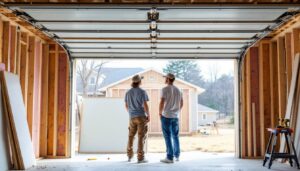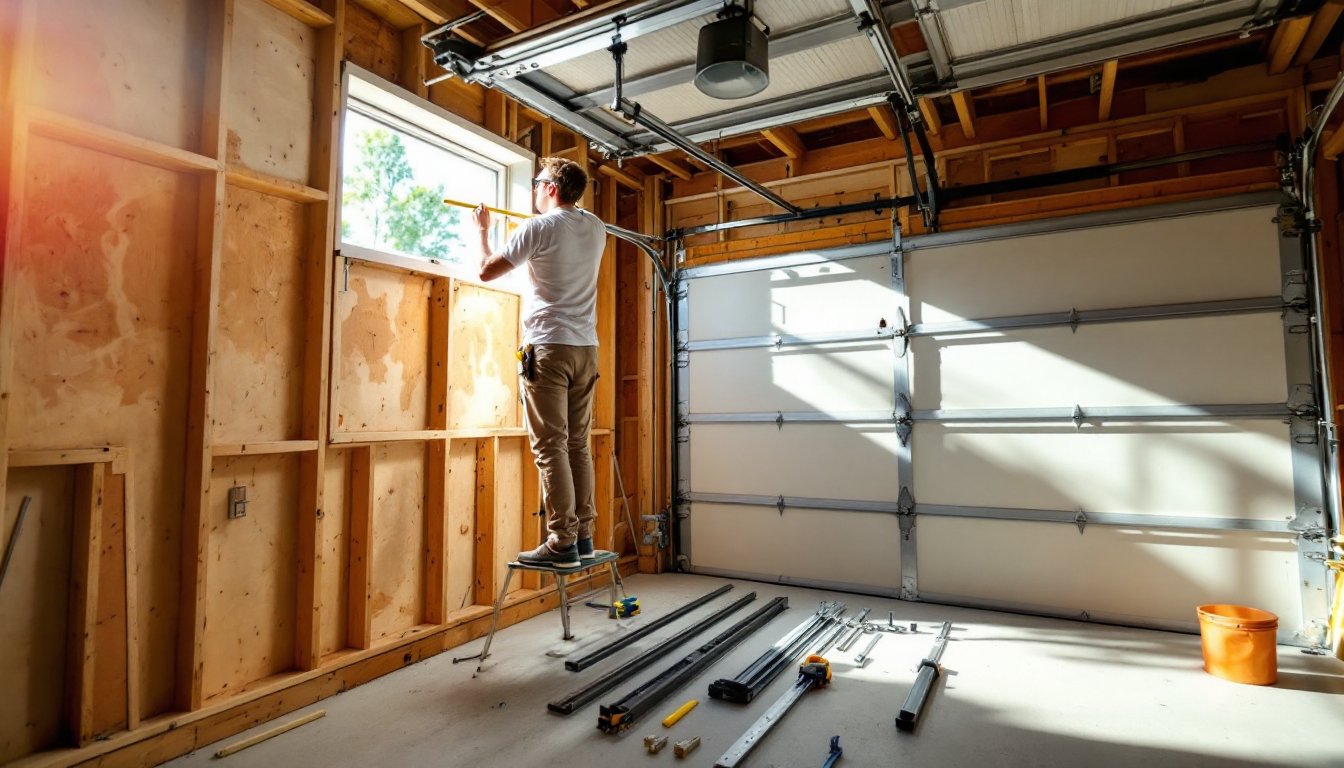
If you’re planning a garage conversion, dealing with a standard overhead garage door can be a real headache. Traditional doors swing down and consume valuable headroom, space you need for walls, insulation, and living comfort. A high lift garage door conversion kit solves this problem by repositioning the door track so it rolls up almost vertically along the wall, tucking neatly into the garage ceiling cavity instead of hanging into your newly claimed living area. This upgrade is becoming a smart move for DIY homeowners tackling garage conversions in 2026, and it’s more achievable than you might think. We’ll walk through what these kits do, why they matter, and how to tackle the installation yourself.
Table of Contents
ToggleKey Takeaways
- A high lift garage door conversion kit repositions your door track to roll vertically along side walls, recovering 6+ inches of headroom critical for garage-to-living-space conversions.
- High lift kits come in two types: Type A for existing doors (track, springs, and brackets replacement) and Type B for heavier-duty retrofits, both engineered with safety-critical spring systems.
- Proper installation requires careful bracket placement every 24–32 inches on studs, Grade 8 bolts, and smooth door alignment testing—skipping these steps risks binding, derailment, or safety hazards.
- High lift conversion kits cost $800–$2,200 for materials, with professional installation adding $800–$1,500, while DIY projects take 16–24 hours and demand helper support and safety focus.
- Spring tension and door weight management are non-negotiable safety concerns; never adjust torsion springs yourself or source cheap springs to save money—hire a professional technician if uncomfortable with this phase.
What Is A High Lift Garage Door Conversion Kit?
A high lift garage door conversion kit is a specialized hardware package that modifies how your garage door operates. Instead of a standard door that runs horizontally along the ceiling and then drops down vertically in front of your garage opening, a high lift system extends the horizontal track much deeper into the garage (typically 12 to 18 inches further back) and uses custom brackets and hardware to guide the door upward along the side walls and into the ceiling space.
The key difference: your door stops consuming headroom in your garage entrance. Once fully open, the door sits nearly vertical against the inside ceiling, leaving the entire garage opening clear. This is a game-changer for garage-to-living-space conversions where every inch counts.
These kits come in two main configurations. Type A kits work with existing door panels and require replacing only the track, springs, and brackets. Type B kits are heavier-duty systems designed for retrofitting or upgrading older, heavier doors. Both rely on extension springs or counterbalance systems to make operation smooth and safe, critical, since a garage door is one of the heaviest moving parts in your home.
Key Benefits For Homeowners And DIY Projects
The primary benefit is reclaiming headroom. Converting a garage into an office, studio, guest room, or fitness space means you need full ceiling height. A standard door frame steals 6 to 8 inches of headspace at the entrance: a high lift system recovers nearly all of it, giving you the clearance needed for drywall, insulation, and a comfortable interior finish.
Second, the conversion opens up interior design options. You’re no longer constrained by a large door frame in the middle of your new room. Walls can be framed more flexibly, windows can be positioned differently, and electrical or HVAC runs don’t have to dodge a lowered track.
Third, safety and durability improve with a well-installed kit. Modern high lift conversion kits come with heavy-duty springs and brackets engineered to handle repeated cycles without sagging or binding. The vertical lift motion also reduces wear on the bottom seal and panels compared to the horizontal-to-vertical bend of a standard door.
For DIY enthusiasts, the conversion is within reach if you’re comfortable working at height, using basic hand tools, and following precise measurements. But, be honest: this isn’t a one-person, weekend job. You’ll need a helper, some scaffolding or a sturdy ladder, and a clear head for safety. Many homeowners find the investment in a How to Convert Your Garage: A Complete Step-by-Step Guide helpful before diving in.
Essential Components You Need To Know
Hardware And Track Systems
A complete high lift conversion kit includes several critical pieces. The vertical track sections are the main difference from a standard system, these are the L-shaped or box-shaped rails that run up the interior side walls of your garage entrance. Standard kits typically provide 10 to 14 feet of track, though tall garages may need extensions.
Rollers and hinges are precision parts that must match your door’s panel profile and weight. If you’re working with an existing aluminum or steel door, confirm the roller type (whether they’re bottom rollers, center rollers, or side rollers) before purchasing a kit. Mixing incompatible rollers and hinges is the quickest way to bind or derail a door mid-cycle.
The spring and counterbalance system is non-negotiable for safety. High lift doors use extension springs (mounted at the top on either side) or a center-mounted torsion spring. A typical residential garage door weighs 300 to 500 pounds: springs handle the load, making opening and closing effortless. If a spring breaks, the door becomes a safety hazard and a finger-crushing risk. Always source springs from the kit manufacturer or a certified supplier, never guess at spring specs.
Brackets and hardware secure the track to framing, anchors, and the door’s edge. High lift systems demand heavy-duty mounting brackets because the forces shift when the door tilts vertical. Bolts should be 5/16-inch or 3/8-inch Grade 8, never hardware-store grades. Undersizing hardware here is a common mistake that leads to sagging or worse.
Finally, look for a weather seal and gasket kit. A vertical-closing door naturally creates a different seal line than a standard door, so ensure your kit includes updated gaskets that fit the new geometry.
Installation Basics For DIY Enthusiasts
Before you start, gather your tools: a tape measure, level, socket set (for Grade 8 bolts), wrenches, adjustable wrench, drill with bits, step ladder and/or scaffolding, safety glasses, heavy gloves, and hearing protection. Do not skip the ladder, working at 10+ feet overhead with heavy components is a safety issue.
Step 1: Measure your garage opening carefully. Record the width, height, and depth (how far the horizontal track extends). Check that your door panels and frame are square and not warped: if they are, a conversion kit won’t fix that problem, and you may need panel replacement first. Essential Garage Conversion Tools for Your Next Project for a tool checklist if you’re uncertain about what you need.
Step 2: Plan your bracket placement. Vertical track should be mounted every 24 to 32 inches along the side walls. Brackets must be bolted through the framing, studs or header, never just drywall. If you hit a stud at an odd spacing, that’s fine: adjust slightly but never skip a stud to make spacing “even.”
Step 3: Disconnect and support the existing door and springs. This step is critical and dangerous if rushed. Close the door, place a C-clamp or locking pliers on the track just below a roller to prevent accidental movement, and use a floor jack or temporary support to hold the door weight while you unbolt the old hardware. Springs are under extreme tension, do not attempt to loosen them yourself. If you’re uncomfortable with this, hire a professional spring technician for this phase alone.
Step 4: Install new vertical track and brackets. Bolt the vertical sections to your studs using 5/16-inch Grade 8 bolts, washers, and lock washers. Use a level constantly. Misaligned track will cause binding or derailment. Tighten bolts fully before moving to the next bracket, do not just snug and come back.
Step 5: Reinstall or rehang the door and rollers. Follow the kit’s specific instructions for roller placement and door alignment. This is where most DIY mistakes happen. The door should roll smoothly without binding, and both sides should lift at the same rate. If one side is higher than the other, the springs need adjustment or the track alignment is off.
Step 6: Install springs and tension. If your kit includes torsion springs or extension springs, confirm the spring constant matches your door weight. Many kits specify this on the product sheet. Have a second person present and never try to hand-wind or adjust a torsion spring yourself. Many resources on Instructables have solid step-by-step visuals if you want a second reference.
Step 7: Test and adjust. Open and close the door ten times. It should move smoothly without noise, bind, or side-to-side play. The door should stay open at any position without a latch or support. If it doesn’t, springs need retuning, again, this is a job for someone experienced or a professional.
Critical safety note: A garage door is not a toy project to tinker with. If you’re uncertain at any point, especially around springs or alignment, stop and call a garage door technician. A falling 400-pound door is a life-threatening hazard.
Cost Considerations And Budget Planning
High lift conversion kits range from $800 to $2,200 depending on door size, weight, and material quality. A standard 9-foot-wide residential kit with brackets, track, rollers, springs, and hardware typically lands in the $1,200 to $1,600 range. Prices vary by region, supplier, and whether you’re buying a kit or sourcing components separately, never choose cheap springs to save $50: that’s false economy.
Additional costs to budget: fasteners and hardware upgrades (locks, hinges, additional brackets if your opening is wider than 10 feet) add $100 to $300. Weather seals and gaskets run $50 to $150. If you need new door panels because the old ones are warped or damaged, add $400 to $1,000 for new aluminum or steel panels.
Labor is where costs diverge dramatically. A professional installation typically runs $800 to $1,500 in labor alone, bringing total costs to $2,000 to $3,700. For DIYers, you’re paying for materials plus any tool rentals (scaffolding, if needed, might run $30 to $50 a day). Resources like Top Garage Conversions to Maximize Your Home’s Potential often show real examples of completed projects with cost breakdowns.
One more thought: factor in the cost of your time. A full installation with minimal experience takes 16 to 24 hours spread over a weekend or two. If your hourly value is high, professional installation might pencil out cheaper than the frustration and risk of a DIY effort gone wrong. Be honest about your skill and comfort level before committing.
Conclusion
A high lift garage door conversion kit is a practical, achievable upgrade for anyone serious about maximizing garage conversion space. The hardware is engineered, readily available, and within DIY reach if you’re methodical, safety-conscious, and willing to ask for help. The payoff, recovering 6+ inches of headroom and unlocking interior design flexibility, is real and immediate. Start by confirming your door size, measuring twice, sourcing a quality kit, and honestly assessing whether you’re comfortable with heights, heavy components, and spring tension. When in doubt, hire the spring and installation portion: it’s not worth a dropped door or torn spring on your hands.