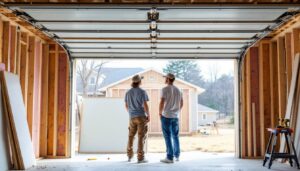
Garage conversions have become one of the smartest moves homeowners can make, especially in Los Angeles where property values soar and square footage commands premium prices. Converting an underused garage into a functional living space, whether it’s a home office, creative studio, or even a rental unit, unlocks thousands of dollars in added value without the cost of a full addition. If you’re sitting on a garage that’s mostly storage or just a parking spot, you’re leaving money and potential on the table. This guide walks you through the LA-specific permits, zoning quirks, popular conversion styles, and the planning steps you need to turn that concrete slab into something that actually earns its place in your home.
Table of Contents
ToggleKey Takeaways
- A garage conversion in Los Angeles costs 40–60% less than a traditional addition while adding comparable square footage and unlocking thousands in home value.
- LA’s parking requirement of one off-street space per dwelling unit is the biggest regulatory hurdle; solutions include partial conversions, driveway turnarounds, or variance applications.
- Building, electrical, plumbing, and parking permits are mandatory for garage conversions, with total approval timelines ranging from 4–12 weeks and permit costs between $500–$2,500.
- Home office conversions are simpler to permit, while accessory dwelling units (ADUs) require separate kitchens, bathrooms, entrances, and utility meters, costing $50,000–$100,000+ but generating rental income in LA’s expensive housing market.
- Planning your garage conversion ADU Los Angeles requires zoning verification, space documentation, architect consultation, cost estimates, and early permit filing to avoid costly mistakes.
Why Garage Conversions Are Booming in Los Angeles
Los Angeles faces a persistent housing shortage, and homeowners are getting creative. A garage conversion offers a fraction of the cost and timeline of building an addition while adding comparable square footage. LA’s sprawling neighborhoods have plenty of properties with underutilized garages, perfect candidates for transformation.
The appeal is straightforward: you already have a roof, foundation, and walls. You’re not digging, framing, or dealing with complicated new connections to the main structure. Garage Conversions: A Complete Guide to Transforming Your Space details how adding living space this way typically costs 40–60% less than a traditional addition. For renters or homeowners looking to offset a mortgage, a garage conversion also creates an accessory dwelling unit (ADU) or studio space that can generate monthly income, a major draw in LA’s expensive rental market.
Beyond finances, LA’s year-round climate makes garage conversions practical. You’re not fighting harsh winters or extreme humidity: finishing the interior is more straightforward than in colder climates.
Understanding Los Angeles Permits and Zoning Requirements
Here’s where many LA homeowners stumble: garage conversions require permits, and LA’s rules are stricter than you might think. The city doesn’t allow you to simply close off your garage and call it done. Building and Safety has specific requirements, and zoning laws vary by neighborhood.
First, understand that LA requires one off-street parking space per dwelling unit (in most zones). If you’re converting a garage into a residential space, you lose that parking. This is the biggest hang-up. Solutions include:
- Converting a portion of the garage, leaving parking intact
- Installing a driveway turnaround or replacing an existing space elsewhere on the lot
- Applying for a parking reduction variance (possible in some zones)
Zoning also matters heavily. Single-family residential zones have different rules than mixed-use or commercial zones. An ADU in one neighborhood might be prohibited in another. Check with your local Department of City Planning or hire a permit expediter familiar with your area before spending money on design.
Costs are real here. Permits alone typically run $500–$2,500 depending on scope. Plan and budget accordingly.
Key Permits You’ll Need
You’ll typically need multiple permits for a proper garage conversion:
- Building Permit – Required for any structural work, electrical, plumbing, or HVAC changes. This is mandatory and non-negotiable.
- Electrical Permit – Upgrading circuits, adding outlets, or running new lines requires this. Many conversions need a dedicated sub-panel.
- Plumbing Permit – If you’re adding a bathroom or kitchenette, you need one. Even adding a half-bath counts.
- Mechanical/HVAC Permit – Adding or extending heating and cooling systems requires approval.
- Parking Exemption or Variance – This is LA-specific and often the longest part. You may need to request relief from the parking requirement or prove you’ve accommodated it elsewhere.
Timeline: Expect 4–12 weeks from application to approval, depending on completeness and whether your project triggers additional reviews. Hiring a permit expediter costs $800–$1,500 but often saves weeks of back-and-forth.
Resources like HomeAdvisor’s cost guides and Angi’s contractor network can help you find licensed professionals who understand LA’s specific codes.
Popular Garage Conversion Ideas for LA Homes
LA homeowners convert garages into several high-value configurations. Knowing what works in your situation helps guide your design and permit application.
Home Office and Creative Spaces
With remote work still strong, a dedicated home office carved from the garage is hugely appealing. You get separation from the main house, natural light from the garage door area, and a clean work boundary.
For a home office, you’ll need:
- Electrical upgrades: Most garages have minimal circuits. Add dedicated 20-amp circuits for devices, lighting, and climate control.
- Insulation and drywall: Garages are notoriously drafty. Fiberglass batts (R-13 minimum) and half-inch drywall transform the space from freezing to livable.
- Climate control: A ductless mini-split system ($3,000–$5,000 installed) handles heating and cooling without massive ductwork.
- Flooring: Concrete is fine, but sealed epoxy ($2–$6 per sq. ft.) or luxury vinyl plank adds comfort and longevity.
Permit-wise, a home office is simpler than a full residential unit, no kitchen, no separate entrance requirements (usually). Budget 8–10 weeks for approval.
Accessory Dwelling Units and Rental Spaces
An ADU, a complete, separate living unit with its own kitchen, bathroom, and entrance, is the premium play. LA law allows ADUs on single-family lots in certain zones, and many homeowners rent these out to offset costs or house family members.
The challenge: An ADU needs:
- Separate egress and entrance: You can’t route traffic through the main house. This often means a new exterior door, pathway, or ramp.
- Complete kitchen and bathroom: Not optional. Both require full permits and inspections.
- Utility separation: Separate meters for water, gas, and electric (typically required by LA, though rules are evolving).
- Minimum room sizes: Bedrooms need minimum dimensions (usually 70 sq. ft. for a bedroom in LA).
An ADU conversion costs significantly more than an office, often $50,000–$100,000+, but the rental income in LA can justify it. Top Garage Conversions to Maximize Your Home’s Potential showcases successful examples.
Garage conversion ADU Los Angeles is now a competitive market segment. Many homeowners leverage this to build equity while housing family or generating passive income.
Essential Steps to Plan Your Garage Conversion
Before you swing a hammer or call a contractor, planning prevents costly mistakes. Here’s the roadmap:
1. Check Your Lot and Zoning
Visit the LA Department of City Planning website or hire a surveyor ($400–$800) to confirm your lot size, zoning designation, and whether ADUs or other conversions are permitted. This is the first filter. Some lots simply can’t be converted without variances.
2. Measure and Document the Space
Garages vary wildly. Standard two-car garages are about 18 × 20 ft., but older homes might have smaller spaces. Measure ceiling height (minimum 7’6″ for living space in LA, 7′ for some conditions), note the location of the garage door, windows, and wall condition. Take photos. Sketch a rough floor plan.
3. Consult a Designer or Architect
For simple offices, you might skip this. For ADUs or complex conversions, an architect ($2,000–$5,000 for preliminary plans) is worth it. They understand LA code and can flag issues early. How to Convert Your Garage: A Complete Step-by-Step Guide outlines the design-to-permit journey.
4. Get Preliminary Cost Estimates
Contact licensed contractors for rough bids on electrical, plumbing, HVAC, and framing work specific to your area. ImproveNet’s project guides offer regional benchmarks. Expect wide ranges: LA labor and materials are pricier than national averages.
5. File for Permits Early
Don’t wait for 100% certainty. Once plans are ready, submit permits. The review process itself often uncovers issues that require tweaks. Starting early gives you runway to adjust.
6. Plan for Parking
This is LA-specific and crucial. Before you commit, know your parking solution. Is there room for a driveway space? Will you apply for a variance? This decision affects permit approval timelines and costs.
Planning overhead typically takes 3–6 months start to finish, including permit approval. Essential Garage Conversion Tools for Your Next Project details equipment you’ll need once work begins.
One final note: if you’re considering a garage conversion ADU Los Angeles, especially for rental purposes, consult an accountant on tax implications and an insurance broker on liability coverage. These steps protect your investment and ensure compliance.