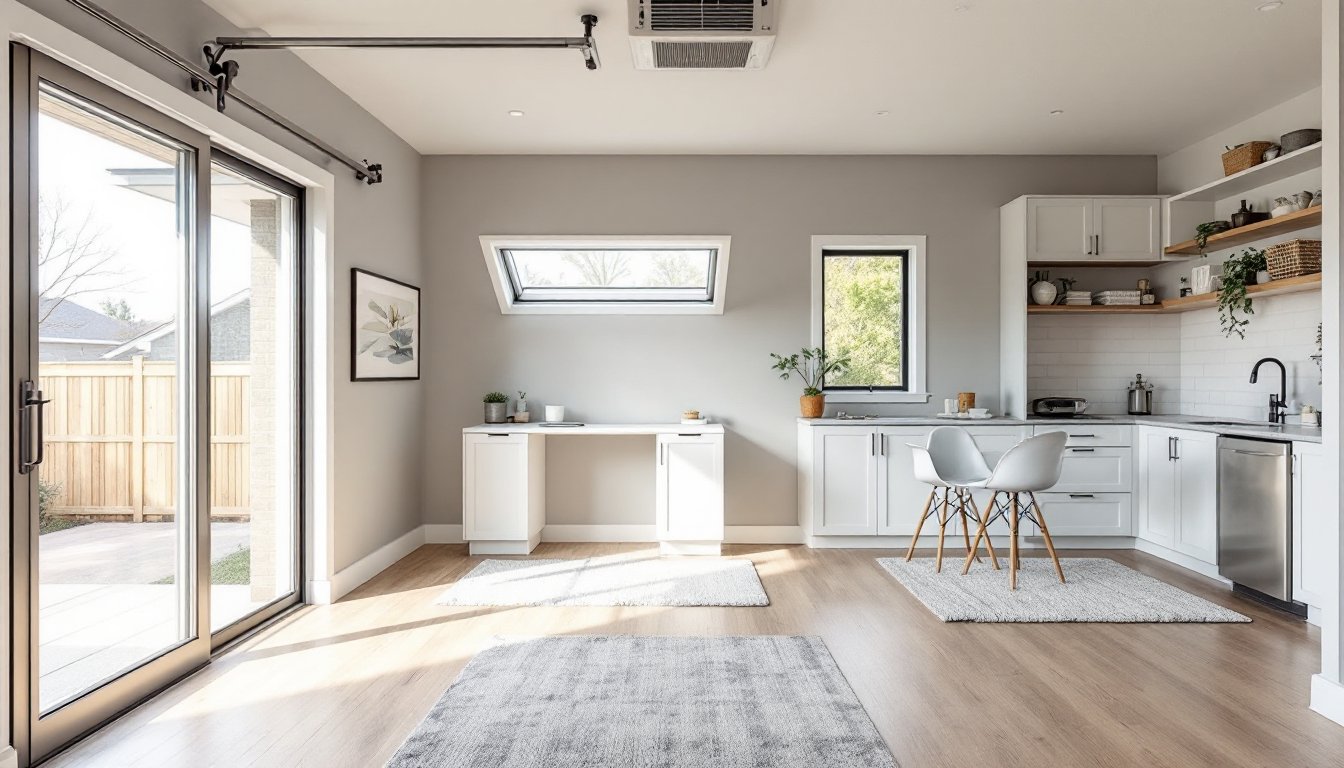
Converting a single garage into livable space is one of the smartest home improvements a homeowner can tackle. A garage conversion adds functional square footage without the headache and expense of building an addition, making it an attractive option for homeowners seeking extra rooms, home offices, or rental units. Whether you’re dreaming of a guest bedroom, a fitness studio, or a cozy studio apartment, thoughtful floor planning is the foundation of success. This guide walks you through the essentials of single garage conversion floor plans, from understanding your space’s constraints to optimizing layouts that work for your lifestyle and budget.
Table of Contents
ToggleKey Takeaways
- Single garage conversion floor plans require careful measurement and code compliance, including egress windows for sleeping rooms and upgraded electrical service to support new appliances and systems.
- A standard single garage conversion costs $15,000–$40,000 depending on purpose, with guest bedrooms being the most affordable option and full ADUs requiring kitchen and bathroom work at the high end.
- Proper insulation, moisture barriers, and ventilation are essential to meet energy codes and prevent mold, while utility placement (electrical, plumbing, and HVAC) should be planned early to minimize costs and structural disruption.
- Guest bedroom suites, home offices with kitchenettes, and ADU rentals represent three popular single garage conversion layouts, each with distinct requirements for space planning, amenities, and code compliance.
- Using free design tools like Google SketchUp and paper furniture mockups before framing helps optimize traffic flow, storage, and functionality while catching design flaws at zero cost.
- Building permits, zoning verification, and parking displacement should be addressed upfront, as unpermitted work can affect insurance, resale value, and legal liability despite the temptation to skip this step.
Understanding Single Garage Conversion Layouts
A single garage typically measures 20 feet by 20 feet (or 20 by 22 feet in some regions), though actual dimensions vary based on build codes and construction era. Older homes often have slightly smaller footprints, sometimes as tight as 18 by 18 feet, while newer construction tends toward the generous side. Before sketching your dream layout, pull your home’s blueprints or measure the space yourself. Account for the garage door opening, which often consumes 8 to 9 feet of width, and any load-bearing walls or support columns that can’t be removed without engineering approval.
The ceiling height in a single-car garage is typically 8 to 9 feet from floor to joist. This is tighter than residential code standards (9 feet minimum), so you’ll need to plan carefully around ductwork, electrical runs, and insulation. Many conversions involve lowering the ceiling strategically, drop ceilings work well in bathrooms and hallways, preserving height where occupants spend the most time.
Standard Single Garage Dimensions and Constraints
When measuring your garage, check for existing utility infrastructure. Most garages have a concrete slab floor, which you’ll need to address for comfort and code compliance, residential spaces require proper underlayment, typically plywood or a moisture barrier, before flooring. The garage door opening typically spans 9 feet wide and 7 feet tall. You’ll need to frame this out and insulate it, turning it into either a window wall or a standard stud wall.
Electrical service is another constraint. Most garages have limited circuits on a 15-amp garage branch. A full conversion demands upgraded service, plan on adding a dedicated subpanel or rerouting circuits through the main panel. Similarly, plumbing adds complexity if you’re adding a bathroom. Running supply lines and drain lines from existing fixtures in nearby areas is feasible but requires careful routing to avoid structural damage.
Build codes also dictate egress (emergency exits). A single garage conversion intended as a sleeping room must have either a door to the outside or a window that meets size and sill-height requirements, typically a 32-inch-wide by 36-inch-tall window with a sill no higher than 44 inches above the floor. This requirement shapes your entire floor plan and is non-negotiable for insurance and legal occupancy.
Popular Conversion Purposes and Space Planning
The best floor plan serves your specific purpose. A guest bedroom layout differs dramatically from a home office, which differs again from a rental studio. Start by defining your primary function, then let that drive furniture placement, utility locations, and traffic flow.
Guest bedrooms are the simplest conversion. You need sleeping space (a queen bed requires at least 12 by 14 feet), a small dresser or built-in storage, and an egress window or door. A separate half-bath is a nice-to-have but not always feasible in 400 square feet. Many homeowners tuck a compact 3-by-5-foot powder room into a corner, which requires running plumbing but frees up the main house guest bath.
Home offices benefit from dedicated electrical outlets for multiple devices, good natural light (plan window placement carefully), and sound insulation from the main house. A 10-by-12-foot office accommodates a desk, a small seating area, and shelving without feeling cramped. Consider acoustic paneling or heavy curtains if noise bleed is a concern.
Rental studios or ADUs (accessory dwelling units) must meet specific zoning and building codes in your jurisdiction. Many states now allow ADUs in residential zones, but you’ll need to verify setbacks, lot coverage, and owner-occupancy rules. A garage conversion as a rental unit typically includes a full kitchen, bathroom, and sleeping area, requiring significant plumbing and electrical work. Your floor plan must account for utility metering, separate trash collection, and parking if local code requires it.
Fitness studios or hobby spaces are flexible in layout because they don’t require egress windows or plumbing. A 20-by-20-foot space easily fits a yoga mat, a few weight machines, or a woodworking bench with room to move. Insulation and ventilation are priorities here, humidity from sweat and noise from equipment demand attention. Top garage conversions often include climate control and flooring upgrades that justify the investment.
Essential Floor Plan Considerations for Your Project
Before you finalize your layout, verify zoning rules and permitting requirements with your local building department. Some jurisdictions allow ADUs: others restrict garage conversions to accessory uses only. Permit costs vary wildly, expect anywhere from $500 to $3,000 depending on your area and project scope. Skipping permits is tempting but risky: unpermitted work can affect insurance claims, resale value, and your legal liability.
Insulation is non-negotiable. Single-car garages are typically uninsulated or have minimal R-value in walls and ceiling. Your conversion must meet local energy code, usually R-13 to R-21 for walls and R-30 to R-49 for ceiling, depending on climate zone. This adds cost but dramatically improves comfort and utility bills. Moisture barriers and proper ventilation prevent mold, especially if you’re in a humid climate.
Parking displacement is a hidden cost many overlook. You’re eliminating your garage, so you’ll either need to add driveway space, convert carport space, or accept street parking. Check local setback and lot-coverage rules before assuming you can simply park closer to the street.
Utility Placement and Accessibility
Your floor plan must route utilities efficiently. Electrical outlets should run along walls where appliances, desks, or entertainment systems will live, typically every 6 feet along occupied walls, plus dedicated circuits for kitchens, bathrooms, and large appliances. Running new circuits from the panel costs $100–$200 per circuit for labor, plus materials.
Plumbing runs are expensive because they require slope (drain lines need at least a 1/8-inch drop per foot) and access for repairs. Keep bathrooms and kitchens stacked vertically above existing fixtures if possible. If your conversion is above a basement with existing supply lines, running PEX or copper upward saves money versus running under a slab. Conversely, if plumbing must run through the concrete slab, you’ll likely hire a plumber, this isn’t a DIY-friendly task.
HVAC zoning matters. A single garage conversion often needs its own supply and return ducts if you want temperature control independent of the main house. Alternatively, a ductless mini-split (air-source heat pump) costs $2,500–$4,000 installed but avoids major ductwork. Position the indoor unit high on a wall away from seating areas to minimize noise and drafts.
Accessibility for future needs is often overlooked. If you’re building a guest suite or ADU, 36-inch-wide doors and lever-style door handles cost almost nothing extra but age-proof your space. A bathroom designed for future mobility aids, wider doors, grab-bar blocking in walls, a curbless shower, adds value without compromising style.
Practical Single Garage Conversion Floor Plans
Let’s walk through three realistic layouts for a standard 20-by-20-foot garage with a 9-foot ceiling.
Layout One: Guest Bedroom Suite places a 12-by-14-foot bedroom in the rear half, with an egress window on the side wall. A 3-by-5-foot bathroom nestles into one corner near the existing home’s water supply. An entryway (4 by 4 feet) creates a transition from the main house: you can add a pocket door here to separate the suite. This layout minimizes new plumbing runs and works well on a modest budget. Estimated cost: $15,000–$25,000 for framing, insulation, drywall, and fixtures.
Layout Two: Home Office with Kitchenette dedicates the 20-foot-long side to a desk and shelving, with a small window for natural light. The opposite wall holds a compact kitchenette (6 feet of counter, bar-height seating) and a half-bath tucked into a corner. This layout suits remote workers and suits small rentals for visiting interns or contract workers. A sliding glass door can replace the garage door opening, creating a pleasant outdoor connection. Estimated cost: $18,000–$28,000 including the kitchenette fixtures.
Layout Three: ADU (Accessory Dwelling Unit) maximizes functionality in all 400 square feet. A 12-by-10-foot bedroom sits near an egress window. A 3-by-7-foot kitchen runs along one wall (barely qualifies as a kitchen but meets code). A full bathroom (5 by 5 feet) is positioned to stack plumbing with the main house. An entryway with a washer-dryer stacked unit tucked into a closet rounds it out. This layout rents quickly and appeals to young professionals or visiting relatives. Estimated cost: $25,000–$40,000 due to full kitchen and bathroom requirements.
Reference ImproveNet and HomeAdvisor for project cost estimates in your area, as material and labor rates vary significantly by region.
DIY Design Tips and Layout Optimization
Start your floor plan on graph paper or use free tools like Google SketchUp to visualize your space at scale. Cut out paper furniture and move it around, this costs nothing and catches problems before you frame a wall. Pay attention to traffic flow: can you walk from the entrance to the bathroom without squeezing past the bed?
Mirrors and light-colored walls make small spaces feel larger. A 20-by-20-foot room is cozy, not spacious, so every design choice matters. Avoid dividing walls if possible: an open plan with strategic furniture placement feels roomier. If you need privacy, sliding barn doors or pocket doors consume less swing space than traditional hinged doors.
Storage solves the cramped-feeling problem. Built-in shelving, under-bed drawers, and tall cabinets maximize usable square footage without blocking floor space. A bedroom wall with floor-to-ceiling closets and shelving costs $800–$2,000 but pays back in functionality and resale appeal.
Flooring is both aesthetic and practical. Concrete slabs are cold and can be damp, finish with vinyl plank flooring (warm, durable, $3–$8 per square foot installed) or polished epoxy ($2–$6 per square foot). Carpet warms the space but holds moisture and stains: save it for bedrooms only, not bathrooms or kitchens.
This Old House publishes detailed remodeling guides that walk through floor planning, framing, and finishing touches. Reviewing one for a similar project builds confidence and uncovers pitfalls you might miss. Garage Conversions for Beginners on Jizai YA covers step-by-step approaches for first-time converters, and How to Convert Your Garage provides technical depth for DIY framers ready to tackle structural work.
Finally, consult Garage Conversions vs. Other Home Expansion Options if you’re deciding between a conversion and building an addition or finishing a basement. Each path has trade-offs in cost, timeline, and complexity. A thoughtful floor plan maximizes your chosen option and ensures your finished space truly serves your life, not just checks a box on a to-do list.