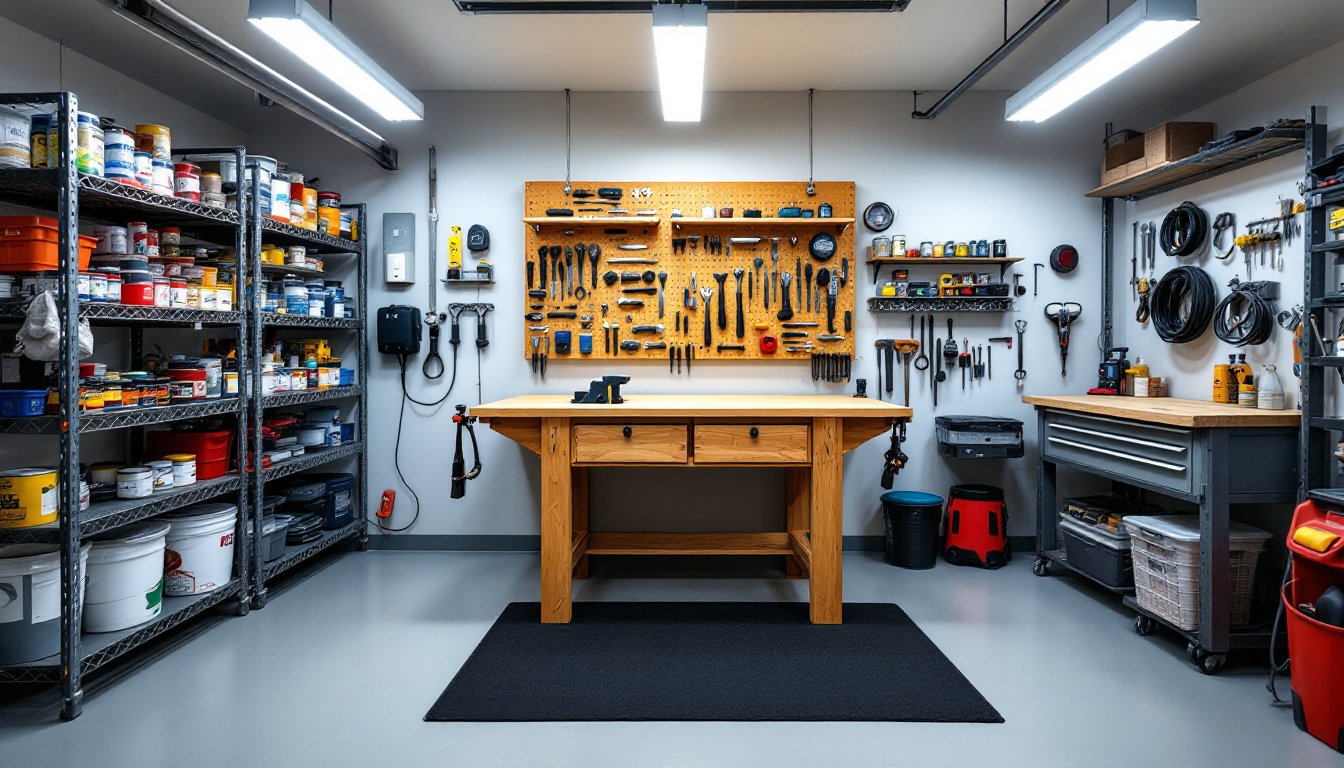
A garage without a purpose is just expensive storage. Whether you’re a weekend woodworker, a restless homeowner tackling repairs, or someone who simply wants a dedicated space to tinker, a well-organized workshop transforms those concrete floors into your personal command center. The difference between a cluttered garage and a functioning workshop isn’t magic, it’s smart planning, the right storage, and a willingness to invest in lighting and power. This guide walks you through seven practical ideas that’ll have your garage working harder for you, starting today.
Table of Contents
ToggleKey Takeaways
- Garage workshop ideas succeed through smart vertical storage using pegboards and wall-mounted shelving, which maximizes space efficiency and keeps tools organized at eye level.
- A functional workbench requires adequate depth (24 inches minimum), proper height (32-38 inches based on your build), and a sturdy 3/4-inch plywood top that handles real clamping and work without breaking the bank.
- Professional-quality lighting and power infrastructure—including LED shop lights, dedicated 240V circuits for power tools, and task lighting—transform both safety and project results.
- You can establish a beginner garage workshop for $800–$1,200 by prioritizing essential tools, sourcing used equipment from estate sales, and choosing wall storage over expensive pre-built cabinets.
- Climate control via a thermostat-controlled shop heater and cross-ventilation, plus visible safety equipment and floor protection, prevent common workshop hazards and enable year-round productivity.
Smart Storage Solutions for Maximum Space Efficiency
Wall-Mounted Shelving and Pegboards
Vertical storage is the workshop’s secret weapon. Instead of letting bins pile up on the floor, wall-mounted shelving puts everything at eye level and keeps your work area clear. A 5-foot by 8-foot pegboard mounted at chest height handles hand tools beautifully, you’ll know exactly where a wrench is without hunting through drawers. Pair pegboards with hook systems (not flimsy nails) rated for actual weight: a basic pegboard hook holds 20 pounds, but heavy items like power tools need reinforced brackets.
For shelving, consider metal garage shelving units over drywall-mounted shelves if you’re in an older garage with soft studs. They’re adjustable, handle serious weight, and you can move them without patching holes. Space shelves 12 inches apart if you’re storing paint cans, 16 inches if you’re stacking lighter boxes. Wall studs are typically 16 inches on center, find them with a stud finder and anchor directly to them for anything over 25 pounds.
Tool Chest Organization Systems
A good tool chest doesn’t need to be fancy: it needs drawers that slide smoothly and compartments that prevent rolling chaos. Drawer organizers, whether foam inserts, compartmented trays, or simple dividers, cut search time dramatically. Label everything. Use a label maker or painter’s tape: sloppy labeling wastes time and leads to buying duplicates.
For power tools, wall-mounted charging stations keep batteries topped off and cords off the floor where you’ll trip over them. Wall-mount pegboard hooks or magnetic strips store metal bits, screws, and small hardware. Pegboards also accept small shelves, bins, and specialty holders, get creative, but keep frequently used items between waist and eye level.
Essential Workbench Setups for DIY Success
Your workbench is the heart of any workshop. Depth matters, 24 inches minimum gives you room to clamp something on one side and work on the other without feeling cramped. Height should match your build: most benches sit around 34 to 36 inches. If you’re shorter, go 32 inches: if you’re tall, 38 inches won’t feel wrong. A poorly sized bench leads to back strain on small projects.
Solid surface beats fancy. A 3/4-inch plywood top over a basic 2×4 frame costs under $150 and handles everything from sawing to clamping. Steel bases are bomb-proof but expensive: wood frames are plenty strong for home use, especially if cross-braced properly. Add a pegboard backboard behind the bench, it’s prime real estate for hanging chisels, measuring tools, and other frequently grabbed items.
Clamp storage is its own challenge. A bench vise bolted to one corner is non-negotiable, buy a 4-inch or 5-inch jaw vise rated for metalworking if you plan to do any real clamping. Bar clamps and hand clamps live in a wall-mounted rack nearby. The goal is that your most-used tools are within arm’s reach without standing up. Workbenches on wheels are tempting but wobbly under real work loads: if you need to move your bench, invest in good locking casters rated for several hundred pounds.
Lighting and Power Solutions That Matter
Overhead garage lights are notoriously dim. A single 60-watt bulb hanging from the rafters casts shadows everywhere. Install LED shop lights (48 inches or 96 inches) across the ceiling, they run cool, produce real light, and use far less power than incandescent fixtures. Aim for at least 50 foot-candles of illumination at bench height: one 4-foot LED shop light covers about 200 square feet adequately, but two running parallel is more practical. Mount them 8 feet high, centered over your work zones.
Add a flexible work light (a 40-watt LED clamp light works great) on your bench for close detail work. Task lighting makes the difference between acceptable and professional results.
Power is equally critical. A standard 20-amp garage circuit runs maybe two power tools simultaneously before the breaker trips. Run a new 240V circuit if you’re planning serious woodworking, a 240V miter saw or table saw gives you headroom and doesn’t drop voltage to other outlets. This requires a licensed electrician in most jurisdictions and a permit. If rewiring isn’t in the budget, at minimum upgrade to a 30-foot heavy-duty extension cord (12-gauge minimum) that can handle multiple tools. Cheap cords lose voltage over distance and slow your tools down. Never daisy-chain power strips, one outlet per tool, and use a quality surge protector for electronics like battery chargers. Popular Mechanics reviews workshop power solutions if you want deeper guidance on electrical setup.
Climate Control and Safety Considerations
A cold garage in winter makes gluing and finishing miserable. Paint, stain, and epoxy all have minimum temperature requirements, most won’t cure properly below 50°F. A 1500-watt shop heater (ceramic or infrared) runs about $40 and keeps your workspace usable most of the year. Use a thermostat-controlled model to avoid wasting energy. In summer, ventilation beats air conditioning: a box fan in a window paired with an open door at the opposite end creates cross-flow that clears dust and fumes.
Safety isn’t glamorous, but it’s non-negotiable. Dust masks (P100 for fine sanding), safety glasses (impact-rated), and hearing protection (NRR 25 or higher if running a table saw or grinder) live in a visible spot, not buried in a drawer. Keep a small fire extinguisher rated for wood, metal, and electrical fires. A first aid kit specific to workshop injuries (bandages for cuts, tweezers for splinters, antibiotic salve) saves trips to the house.
Floor safety matters too. Spilled oil and sawdust create slip hazards. A rubber anti-fatigue mat in front of your workbench reduces strain on your feet and legs during long sessions. Keep pathways clear, workshop accidents spike when someone trips over a tool. Family Handyman’s safety guides cover workshop hazards in detail worth reading before your first project.
Budget-Friendly Workshop Ideas for Beginners
You don’t need $10,000 to start. A basic workshop runs $800–$1,200 if you’re thoughtful. Begin with essential garage conversion tools rather than specialty gear. A good cordless drill, a circular saw, a tape measure, and a square handle 90% of beginner projects.
Hit estate sales and online marketplaces for used workbenches and tool chests, solid wood bases from the 1980s are often cheaper than new and built stronger. Avoid rusty old hand tools: they’re tedious to restore. Focus budget on a quality vise and clamps: cheap clamps slip mid-project and waste time.
Wall storage beats buying expensive cabinets. Pegboards and 2×12 shelves mounted on studs cost a quarter of a pre-built system and offer more flexibility. Paint your concrete floor with epoxy garage floor coating, it resists oil stains and makes cleanup faster. One gallon covers roughly 250 square feet: budget two gallons for a two-car garage.
Start small and add tools as projects demand them. Borrowing or renting specialty tools (a pneumatic nail gun, a tile saw, a drywall lift) for one-off jobs saves thousands. Fix This Build That offers beginner project plans that don’t require a fully stocked shop.